
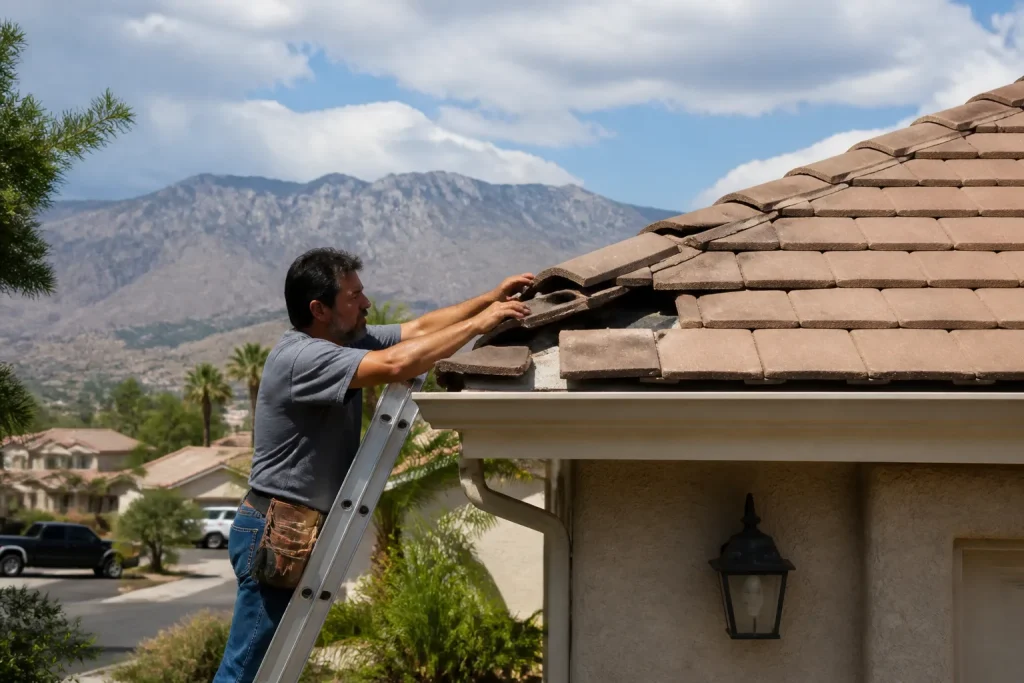
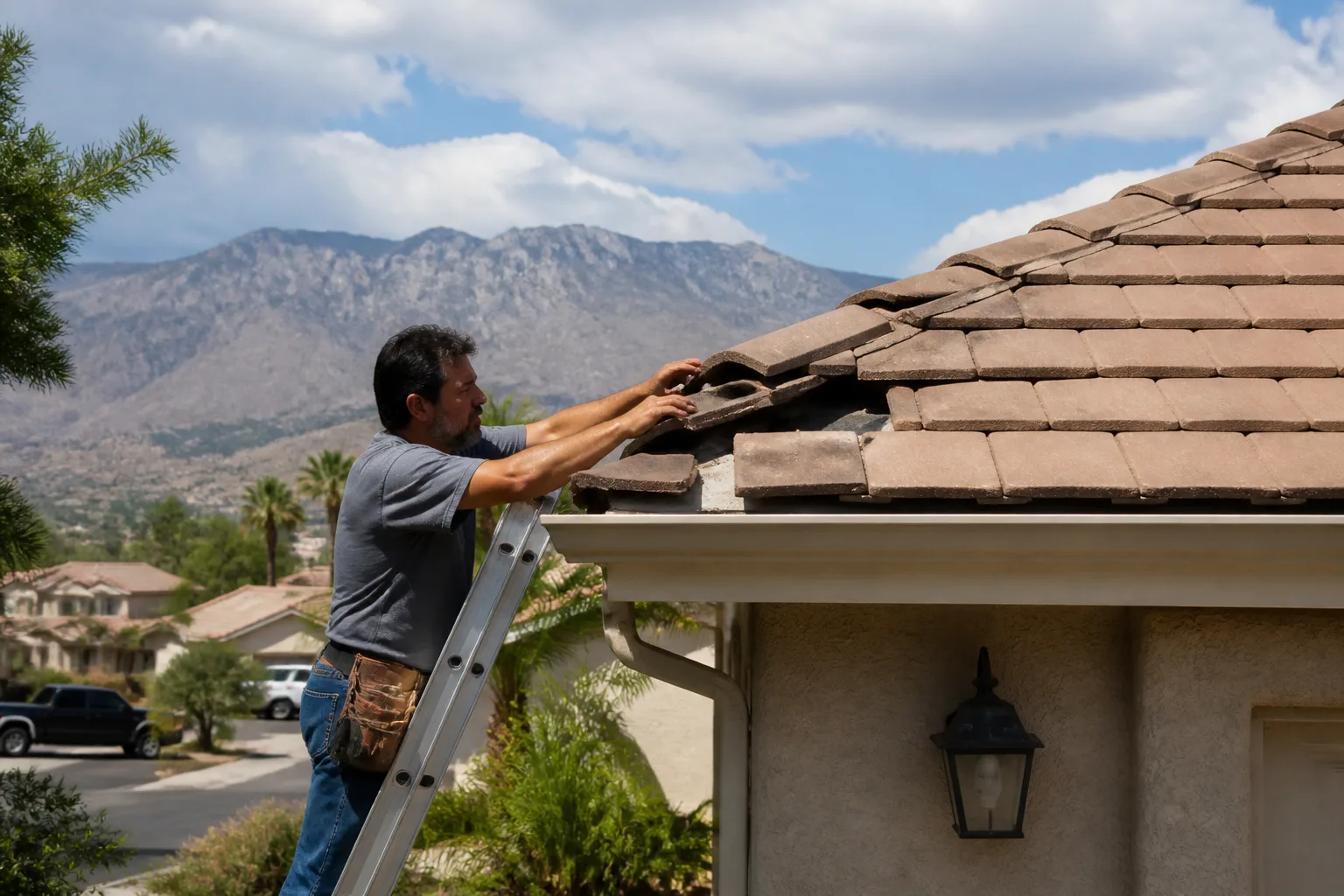
Emergency Roof Repair Near Me: What San Bernardino Homeowners Should Do First
In a San Bernardino roof emergency, the first 30 minutes determine whether you’re dealing with a contained repair or a cascading interior disaster. Water moves fast once it breaches the roof deck, and the decisions you make before a contractor arrives often matter more than what happens after. Here’s exactly what to do, in order, starting right now. If you’d rather hand this off immediately, call (866) 361-0798 and we’ll walk you through stabilization over the phone.
What to Do in the First 30 Minutes After Roof Damage
The moment you notice water coming in or see visible roof damage from the ground, your job is containment. Interior water damage in San Bernardino homes routinely exceeds the original roof repair cost within a single rain event, especially when attic insulation soaks through and ceiling drywall collapses. The moves that prevent that happen before any contractor picks up the phone.
Step one: clear the impact zone below the leak. Move furniture, electronics, rugs, and anything porous out of the drip path. Water spreads laterally along ceiling joists, so the visible stain is often ten feet away from the actual breach. Clear a generous radius.
Step two: place containment. Five-gallon buckets work for direct drips, but a wide plastic tote catches splash better. If the ceiling is bulging, puncture it once with a screwdriver at the lowest point to release the water under control. A controlled release prevents a sudden ceiling collapse that dumps water, insulation, and drywall across the room.
Step three: protect the attic insulation. If you have attic access, lay plastic sheeting or contractor bags over insulation near the leak zone. Soaked fiberglass loses R-value and becomes a mold vector. Cellulose insulation drinks water like a sponge. Keeping it dry saves you a secondary remediation bill.
Step four: document everything before you move anything else. Photograph the interior water, the ceiling stain, the attic damage, and anything visible from outside. These photos are what insurance adjusters compare against later. Do not remove damaged materials, do not tear out drywall, and do not throw away wet insulation until your adjuster has seen it.
How to Safely Assess the Damage Without Getting on the Roof
You do not need to climb a ladder to understand what’s wrong. In fact, you shouldn’t. Wet shingles, wind-loosened flashing, and compromised decking make roof surfaces unpredictable after a storm, and a fall turns a repair job into an ambulance call. Ground-level and attic-only assessment tells you 90% of what a contractor needs to know.
From the ground, look for:
- Missing or lifted shingles, especially on south-facing slopes that took the brunt of Santa Ana wind gusts
- Flashing pulled away from chimneys, vents, or skylight curbs
- Debris impacts: branches, tiles from neighboring roofs, anything that struck at speed
- Granule washout collecting in gutters or downspouts, a sign of shingle surface failure
- Daylight visible through the roof edge or ridge line from below
From inside the attic, look for:
- Water tracks on rafters and underside of decking, often darker than the surrounding wood
- Damp insulation that compresses under hand pressure
- Rust or corrosion around roofing nails, which indicates long-term moisture exposure
- Light penetration through the deck: any pinhole of daylight means a water path
For photos that actually support an insurance claim, use your phone’s flash to capture sheen on wet wood, include a wide-angle shot of the context, and hold a tape measure against visible damage to give scale. Adjusters love measurement context. It makes their job faster, and a faster adjuster processes your claim sooner.
In our experience, homeowners who document before touching consistently get smoother claim outcomes than those who start tearing things out. The Ridge Cap Roof Repair home team has walked San Bernardino homeowners through this exact sequence dozens of times, and the photos make a measurable difference.
When a Tarp Is Enough and When It Isn’t
A temporary tarp is the standard first response for a wind-damaged or water-breached roof, but not every tarp job is equal, and not every damage scenario calls for one. Understanding the difference helps you evaluate any contractor who shows up promising quick protection.
A legitimate emergency tarp covers the entire damaged slope, not just the visible breach site. It wraps at least four feet past the damaged area on all sides, gets fastened with furring strips and cap nails (not staples that pull loose in the next wind event), and integrates with the existing roof so water can’t run underneath it at the top edge. In San Bernardino’s October through November Santa Ana season, when sustained winds hit 40 to 50 miles per hour with higher gusts, a poorly anchored tarp becomes a sail and causes more damage than it prevents.
Here’s the division you need to know:
- Tarp is appropriate when: the breach is localized, the decking below is still structurally sound, and the goal is keeping water out while you schedule a proper repair within one to three weeks
- Tarp is not enough when: decking is soft, multiple slopes are compromised, or the roof is already at the end of its service life and this storm simply exposed it
San Bernardino’s late-season monsoon moisture, which can arrive unpredictably in August and September, makes a different demand than Santa Ana wind damage. Monsoon-driven leaks are often slow and persistent, revealing themselves hours after rain stops. Wind damage is immediate and obvious. Knowing which season you’re in tells you how urgent the repair actually is.
What to refuse under pressure: any contractor who demands full payment before work begins, any contract that assigns insurance benefits to the contractor without your understanding, and any door-knocker who appeared in your neighborhood immediately after a storm with a “we’re already in the area” pitch. Legitimate San Bernardino roofers schedule work. Storm-chasers chase storms, and they’re gone before warranty issues surface.
The Permitting Question Most Homeowners Miss
Most emergency roof repairs in San Bernardino do not trigger a building permit. But the scope of damage sometimes does. The general rule: if the repair is limited to shingles, underlayment, flashing, or a small section of decking, you’re typically in repair territory that doesn’t require permits. If the damage extends to structural members like rafters or trusses, or if the repair area exceeds the City of San Bernardino’s threshold for reroofing without a permit, you’ll need to file.
This matters because insurance claims and real estate disclosures ask about unpermitted work. A contractor who tells you to skip a required permit is saving you money in the wrong place. The building department’s concern is structural integrity, and structural compromise is exactly what a fallen tree branch or severe wind event can create.
What we tell San Bernardino homeowners is this: if you’re unsure whether your damage scope requires a permit, ask the contractor to put it in writing. A straight answer on permits is a fast test of whether you’re dealing with a legitimate operation. We inspect before we recommend, on every job, and that includes telling you plainly when a repair crosses into permit territory.
If you’re looking for a deeper assessment, our Roof Inspection in San Bernardino service documents everything an adjuster or real estate transaction needs, with photos and a written scope of work.
How San Bernardino’s Weather Predicts Your Repair Needs
Ridge Cap has worked roofs across the Inland Empire long enough to see clear seasonal patterns. Understanding them helps you make smarter decisions before an emergency lands.
October through November: Santa Ana wind season. This is the highest-volume emergency window for San Bernardino roofers. Dry, sustained northeast winds strip shingles, lift flashing, and hurl debris. The damage is almost always on the windward slope, and it’s almost always visible from the ground. If you live in neighborhoods like Verdemont, North Park, or the foothills above California State University San Bernardino, wind exposure is a year-round consideration but a fall-season reality.
August through September: late monsoon moisture. These storms arrive quickly, drop heavy rain for short bursts, and reveal every existing weakness in a roof system. Leaks that start during monsoon season are often the result of damage that happened months earlier. The water just finally found its path.
Spring: low-emergency, high-inspection season. This is when smart San Bernardino homeowners schedule inspections ahead of summer heat and fall winds. The right material for your roof matters here more than anywhere else: a roof spec chosen for San Bernardino’s UV load and wind exposure performs differently than one built for coastal humidity. With seven manufacturers, from GAF to CertainTeed to Boral, material-to-climate matching is a conversation we have constantly.
Here’s the argument for having a contractor relationship in place before you need one: when a storm hits, every roofer in San Bernardino gets the same flood of calls. The homeowners who already have an inspection on file, photos on record, and a known roof condition get triaged to the front. Not because of favoritism. Because the contractor already knows exactly what they’re dealing with.
Roof Repair in San Bernardino is what we do most often, and it’s where this emergency conversation usually lands. Repair when it makes sense. Replace when it doesn’t. That’s the whole philosophy.
What a Tarp Must Actually Cover to Be Effective
Let’s get technical for a moment, because the quality difference between a good tarp job and a bad one determines whether you’re dealing with one repair or two. A proper emergency cover in San Bernardino has four characteristics:
- Coverage extends at least four feet past the damage on every side. Water runs under tarps at the edges. Generous coverage compensates for wind-driven rain.
- The top edge is sealed against water intrusion. On a sloped roof, the tarp’s upper edge must tuck under a course of shingles or get sealed with roofing cement, not just anchored with nails. Unsealed top edges funnel water directly under the cover.
- Fasteners are designed for high wind. Cap nails with plastic washers, spaced every 12 to 18 inches, with furring strips on every seam. Staples fail. We’ve pulled tarps out of trees in San Bernardino after the first post-repair Santa Ana event.
- The bottom edge extends past the eave or drip edge. Water needs a clean exit path off the roof. A tarp that stops short of the eave dumps water behind fascia boards and into soffit areas.
From the ridge cap down, every detail of a temporary cover matters as much as the permanent repair it’s protecting.
The Bottom Line
After storm damage in San Bernardino, the first 30 minutes are yours. Contain the water, protect your insulation, photograph everything, and do not sign a contract from a door-knocker before you’ve verified who you’re dealing with. Tarp only the damaged slope with proper anchoring, understand when damage crosses into permit territory, and know that our seasonal weather patterns make wind damage the most common emergency here. If you’re in San Bernardino and need help, Ridge Cap Roof Repair offers free estimates. Call (866) 361-0798 and we’ll talk through your specific situation, starting with what you can see from the ground.
Written by the team at Ridge Cap Roof Repair, serving San Bernardino since 2018.
Frequently Asked Questions
Faster than most homeowners expect. Within 24 to 48 hours, wet insulation compresses and loses R-value, drywall can begin to sag, and mold can establish on porous surfaces. In San Bernardino’s warm climate, the mold window shortens further. That’s why containment in the first 30 minutes matters so much. Call (866) 361-0798 for immediate guidance on your specific situation.
Most policies cover emergency mitigation, including temporary tarping, as part of the overall claim. Keep every receipt and photograph the damage before covering it. Your adjuster needs to see the damage state to approve the claim. We recommend documenting everything, calling your insurer, and then scheduling the permanent repair. For more on documentation, see our Roof Inspection in San Bernardino service.
A properly installed tarp can protect a roof for 30 to 90 days in most conditions. But San Bernardino’s Santa Ana winds shorten that window. Tarps degrade under UV exposure, and sustained wind stresses every fastener. We recommend scheduling the permanent repair within two to three weeks whenever possible. If you’re unsure whether repair or replacement is the right call, Roof Replacement in San Bernardino is a conversation we’ll have honestly with you.
No. Wet shingles, loose decking, and wind-compromised surfaces are unpredictable after a storm, and orthopedic surgeons in San Bernardino stay busy every fall treating ladder falls. Assess from the ground and from inside the attic. If you see daylight, insulation damage, or water tracks, photograph them and call a licensed roofer. The inspection is the starting point before any recommendation, and it’s safer on the contractor’s liability insurance than on yours.
Need Roofing Help?
Call Ridge Cap Roof Repair — licensed & insured, here with fast after-hours help in San Bernardino.
(866) 361-0798