
Last updated October 30, 2026
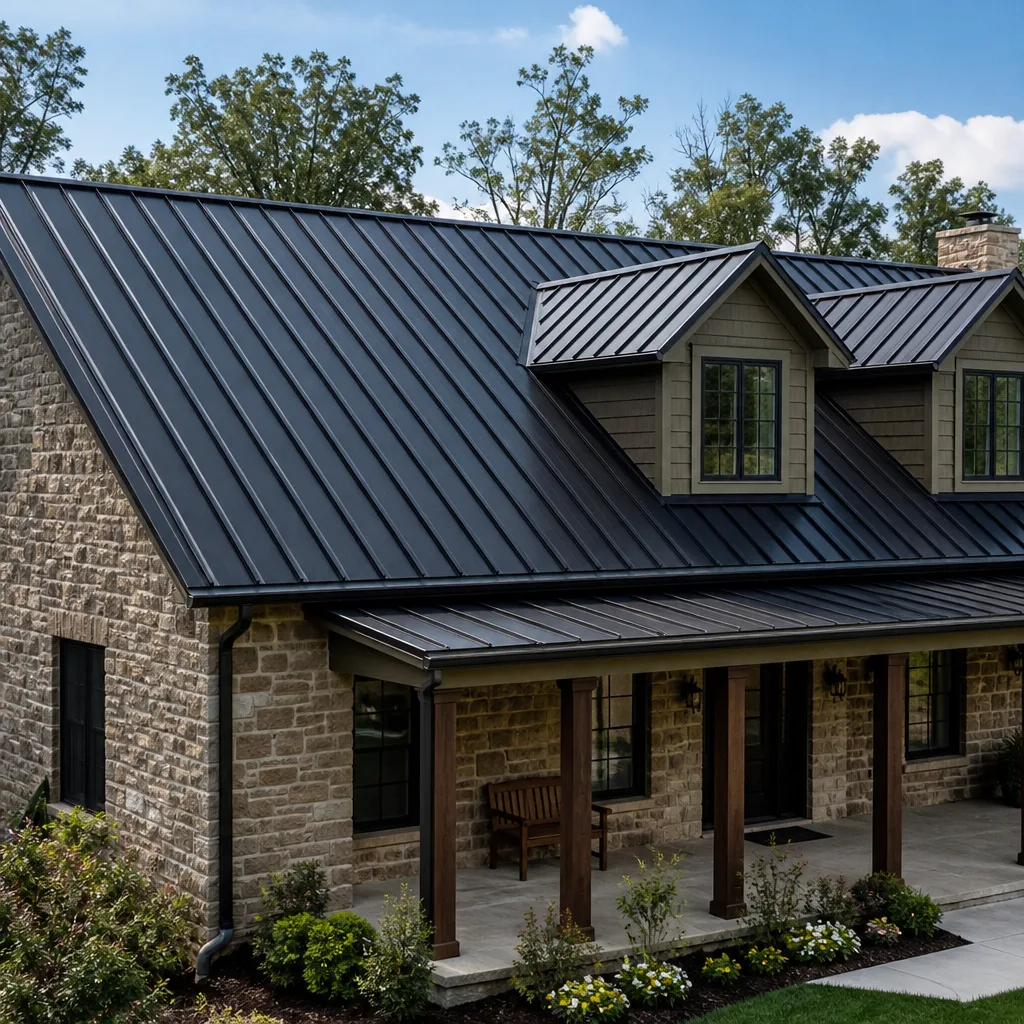 Metal roofing
 Architectural shingles
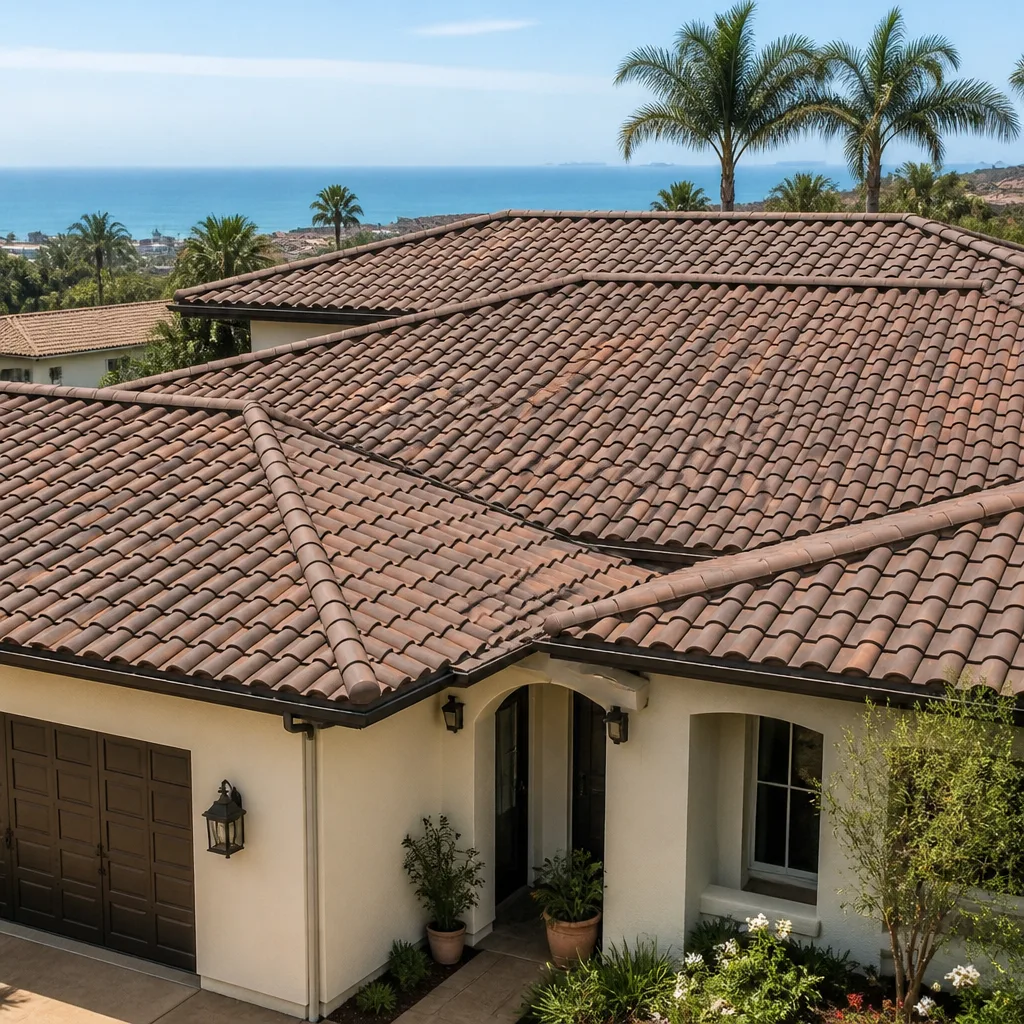 Tile roofing
 GAF
 Owens Corning
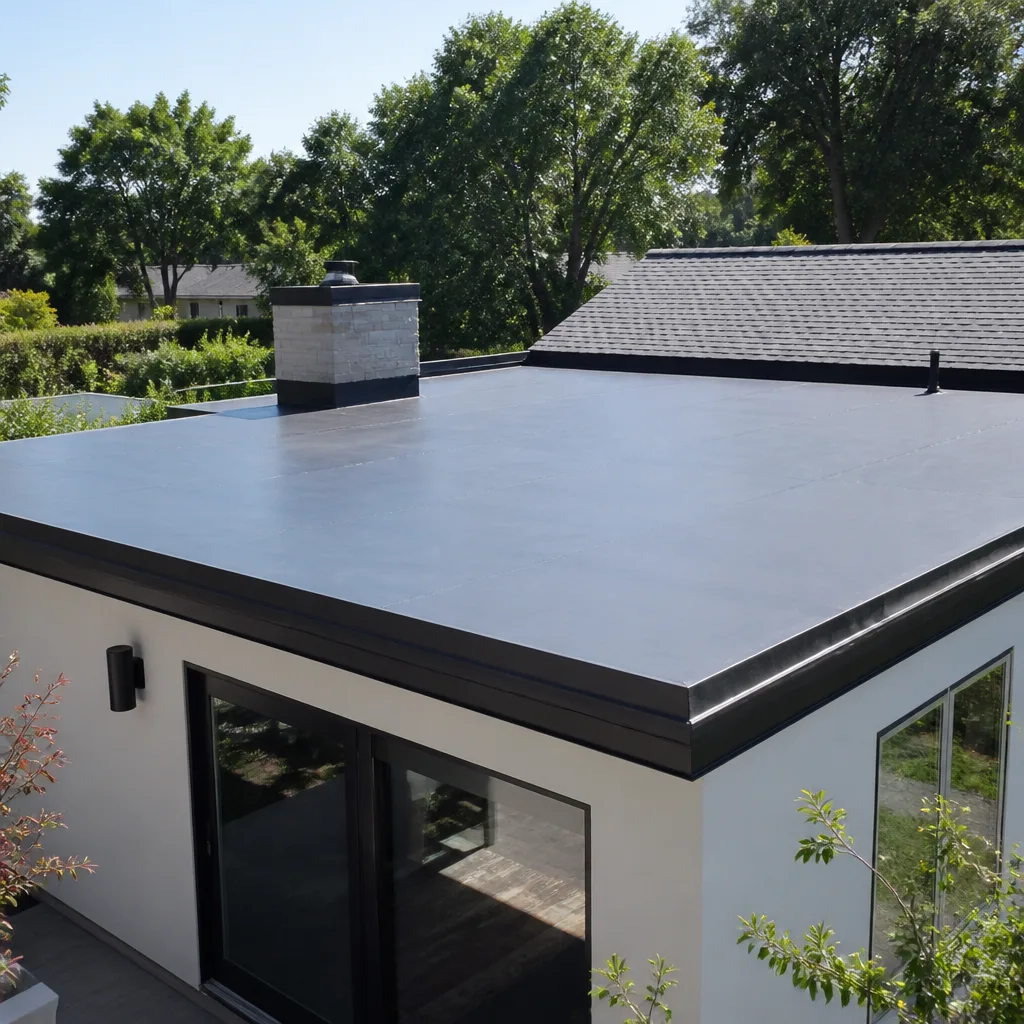 Flat & low-slope
Free roof inspection with deck photos before we talk money - GAF and Owens Corning certified installation
Seasonal Roofing Care for San Bernardino: Year-Round Homeowner’s Guide
October is the month most roofs fail in San Bernardino. Not because of rain. Because the first Santa Ana winds arrive before homeowners have checked ridge caps and flashing that spent five months baking under triple-digit heat. Most roofing advice is written for other climates, places with snow load and ice dams and spring thaw cycles. San Bernardino has its own rhythm: a punishing heat season, a violent wind season, a short intense rain window, and a UV recovery period. Each one creates a distinct vulnerability on your roof, and each one requires a specific inspection at a specific time. This guide covers the full annual cycle, what to look for, when to look, and what actually matters on San Bernardino roofs. For more context, see our The Complete Guide to Roofing in San Bernardino.
Styles & brands we work with
Quick Answer
Seasonal roof care in San Bernardino means inspecting for heat damage in summer, wind damage before and during Santa Ana season, latent leaks during the January-to-March rain window, and attic-visible deck deterioration in spring. The most important inspection happens in late September or early October, before the first Santa Ana event, because wind exploits heat-weakened ridge caps and flashing that would otherwise hold through winter. A five-point seasonal check takes under an hour and catches most failures before they become interior water damage.
Table of Contents
- Heat Season (May – September): Attic Ventilation and Soffit Blockage
- Santa Ana Season (October – December): Ridge Caps, Flashing, and Pre-Wind Inspection
- Rain Window (January – March): Latent Leak Paths and Short, Intense Storms
- Spring Recovery (April – May): Reading the Attic for Post-Rain Damage
- Year-Round: Desert Dust, Moisture Mats, and Invisible Rot
- Building a Yearly Inspection Rhythm That Matches San Bernardino’s Climate
- How Material Choice Affects Seasonal Performance in San Bernardino
- Common Mistakes to Avoid
- When to Call a Professional
- Frequently Asked Questions
- The Bottom Line
Heat Season (May – September): Attic Ventilation and Soffit Blockage
San Bernardino summers routinely push attic temperatures past 140 degrees. That heat does two things to your roof: it accelerates shingle granule loss and adhesive breakdown on asphalt products, and it superheats the air trapped under your decking, which transfers downward into living space and upward through the roofing material itself. The single most overlooked summer maintenance task in San Bernardino is not on the roof surface. It’s at the soffits.
Birds, rodents, and wasps build nests in soffit vents throughout spring. By July, those nests have matured and blocked a significant portion of intake airflow. When soffit intake drops, ridge and static exhaust vents pull less air, attic temperatures climb further, and the roof deck sheathing absorbs more heat from below. That extra heat load reduces shingle life measurably. We’ve pulled apart roofs in the San Bernardino foothills where the south-facing slope showed premature granule loss directly correlated to soffit blockage on that same side of the house.
Five-Step Summer Ventilation Check
- Walk the perimeter and visually inspect every soffit vent. Look for straw, grass, mud daubing, or paper wasp combs.
- From inside the attic on a hot afternoon, hold a tissue near the soffit vents. If it doesn’t flutter, intake is blocked somewhere.
- Check ridge vent or static exhaust vents from the exterior. Algae staining around them often indicates poor exhaust airflow.
- Measure attic temperature at the ridge versus outdoor temperature. A spread over 20 degrees on a 95-degree day signals inadequate ventilation.
- Clear any blocked vents you can safely reach from a ladder. For upper-story or steep-slope soffits, hire a professional.
Tile roofs, which are common throughout San Bernardino from the older neighborhoods near downtown to newer developments in the north end, handle radiant heat differently. The tile itself shades the underlayment, but inadequate ventilation still traps heat under the deck. Boral and Atlas both make tile and composite profiles engineered for high-heat climates, and the right material-to-climate match starts with an honest assessment of what’s actually happening in your attic, not a guess.
Santa Ana Season (October – December): Ridge Caps, Flashing, and Pre-Wind Inspection
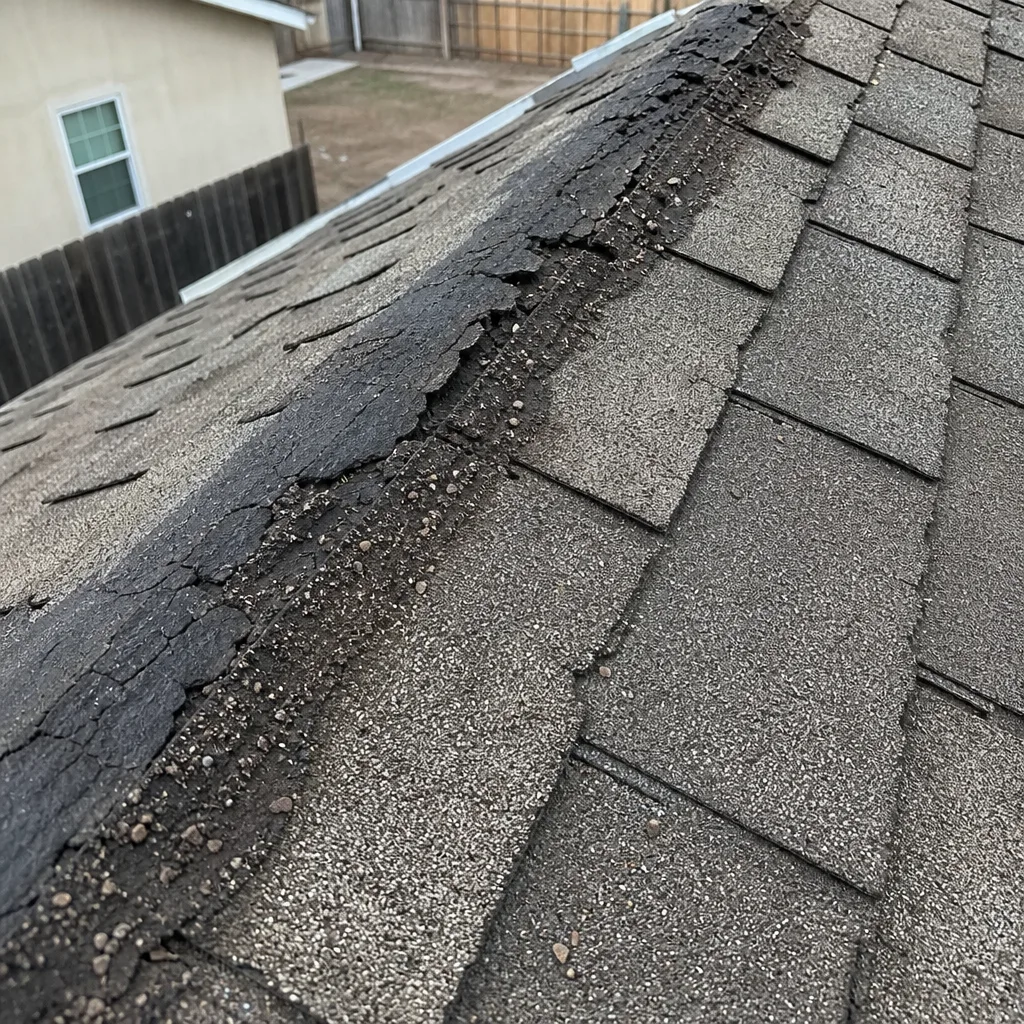
Santa Ana winds in San Bernardino typically arrive in October and peak from November through December. Sustained winds of 30 to 40 mph with gusts over 70 mph are common in the Cajon Pass corridor and along the foothills north of the 210. Those winds attack the highest, most exposed details on your roof first: ridge caps and hip lines. The ridge cap is the hardest-wearing, most technically demanding detail on any roofing system. When it’s installed correctly, it holds through decades of wind events. When mortar joints crack or cap shingles lose their seal, wind gets underneath and starts peeling.
Here’s what happens on a Santa Ana event night in San Bernardino: roof failures cluster between 10 PM and 4 AM, when gusts are strongest and temperatures drop. Homeowners hear flapping, thumping, or tiles sliding. The damage was almost always visible a month earlier, but nobody looked. A pre-wind ridge cap and flashing inspection in late September or early October catches most of it.
Pre-Santa Ana Inspection: What We Check From the Ridge Cap Down
- Ridge cap integrity: mortar condition on tile caps, sealant adhesion on shingle caps, and any cap pieces already shifted out of alignment.
- Hip lines: cracked mortar joints, displaced hip tiles, and exposed fasteners.
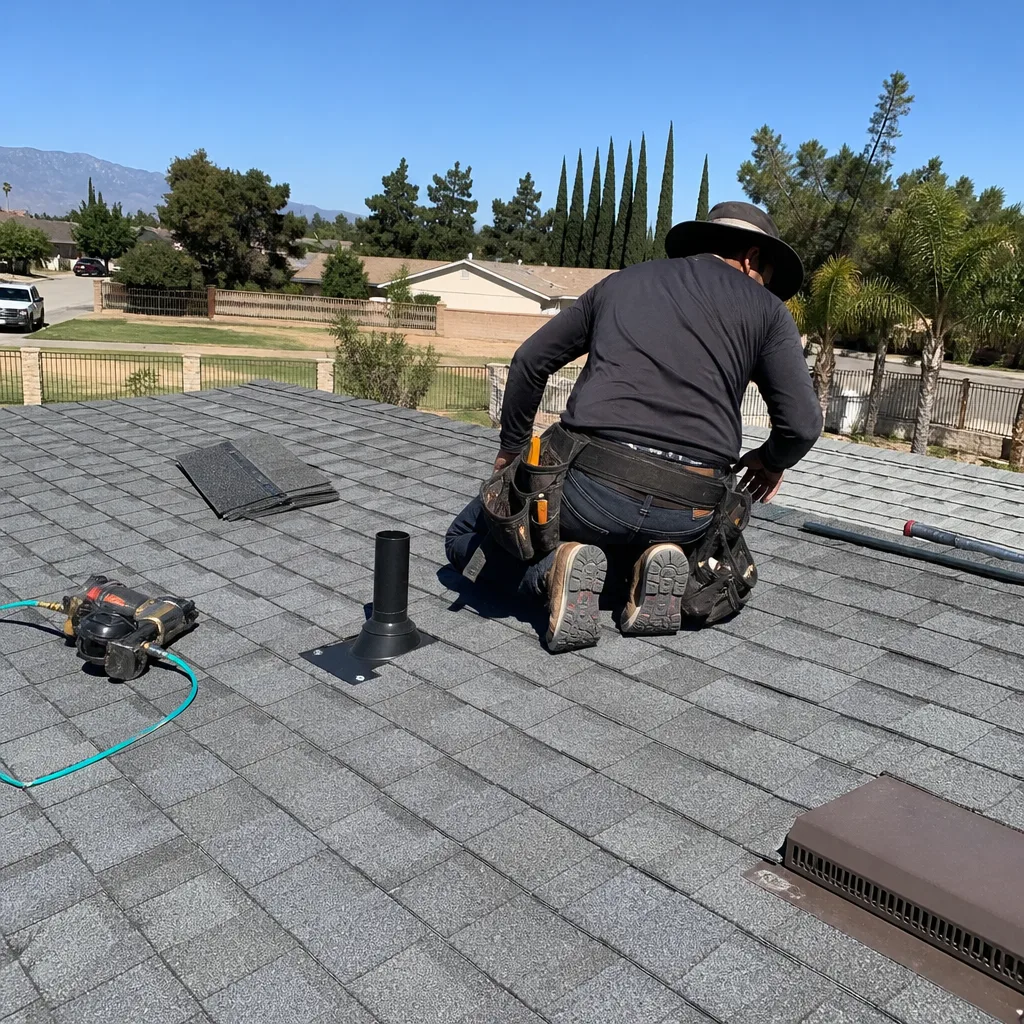
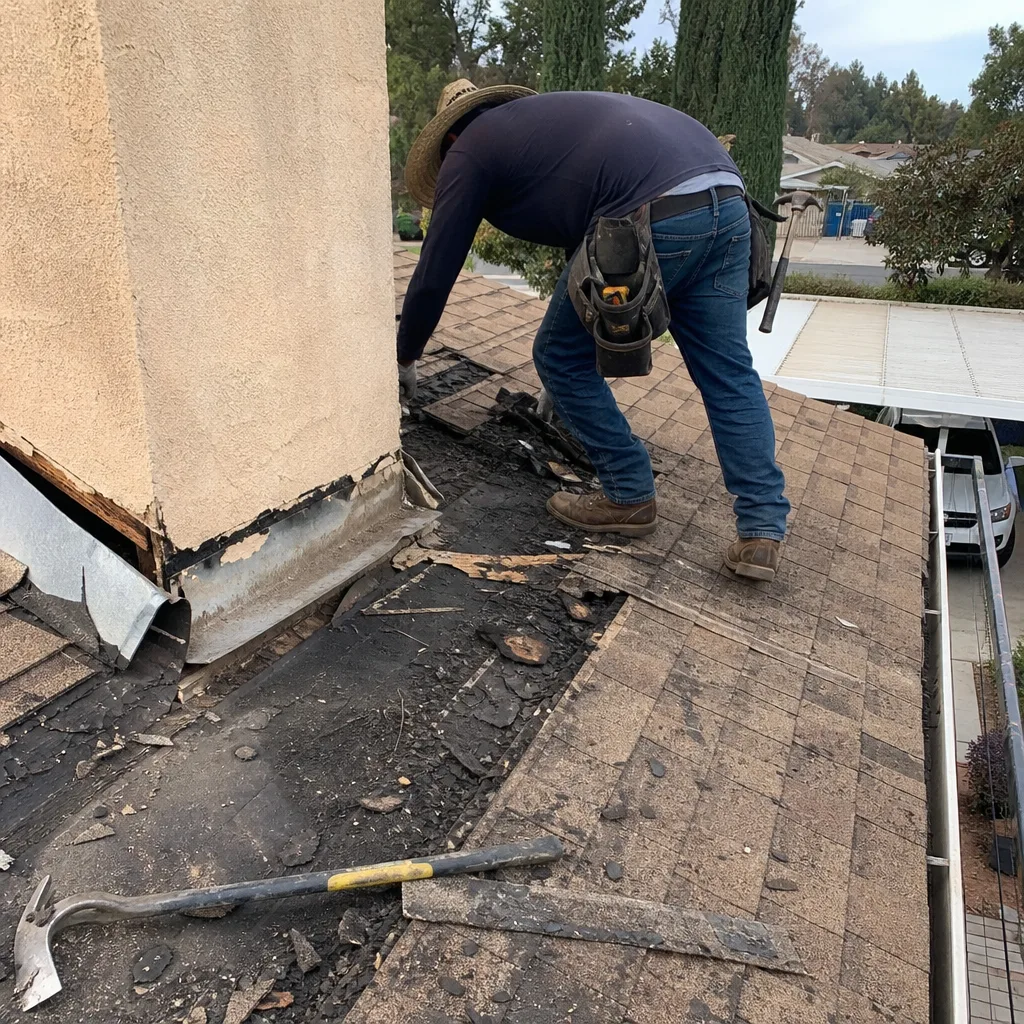
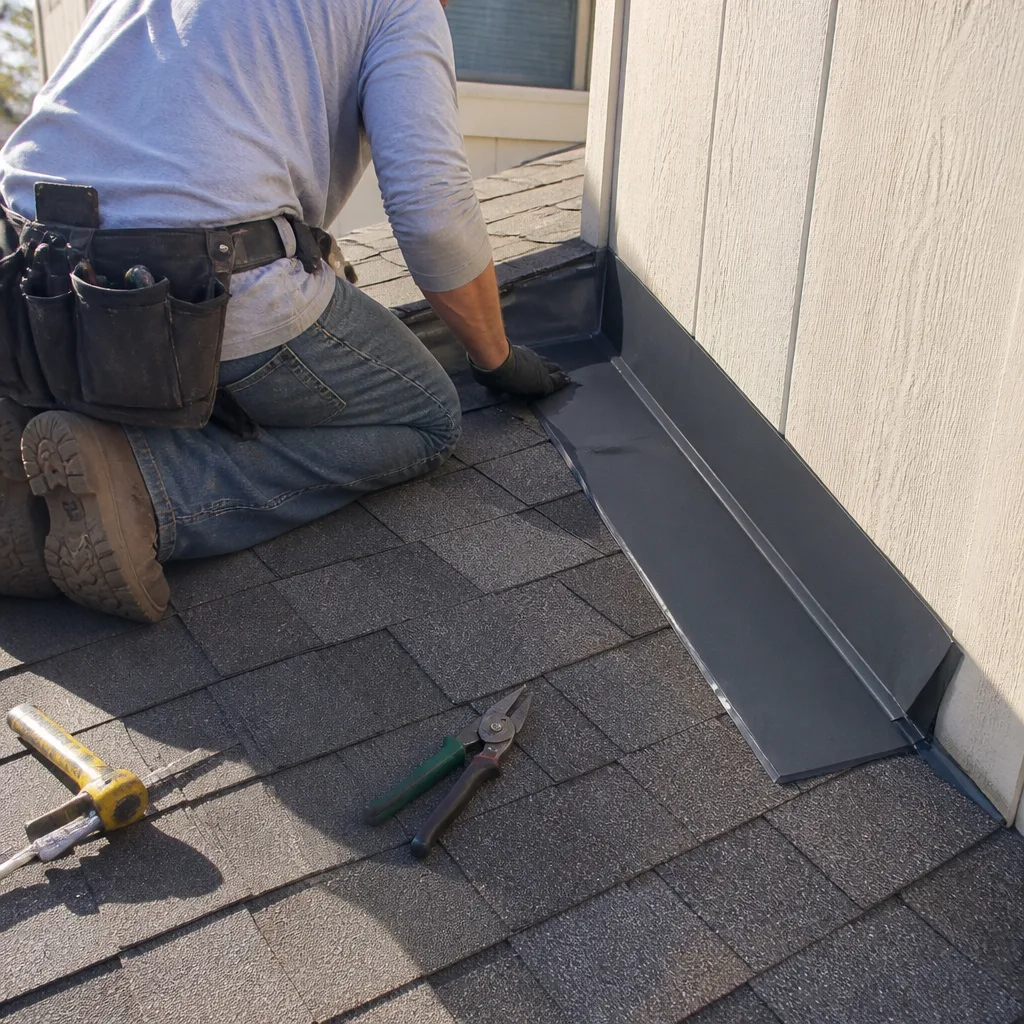
- Flashing at penetrations: pipes, vents, skylights, and chimneys. Look for lifted counterflashing, dried sealant, and visible gaps.
- Drip edge and rake edges: loose nails, lifted metal, and shingle overhang lifting at the gable ends.
- Loose debris: anything on the roof that could become airborne at 70 mph and cause more damage.
High-tension work on steep slopes is genuinely dangerous. If your roof pitch exceeds 6:12 or you have any hesitation about ladder work, this is a job for a trained roofer. The inspection itself is affordable and fast. The repair work that follows, if needed, should come from the same crew that inspected. When findings are never lost in translation between separate teams, you know exactly what was seen, what it means, and what the fix costs. That’s how Ridge Cap Roof Repair structures our service model: one team handles the inspection, the repair, and the replacement when it’s needed. No scope hand-offs to outside subcontractors. For a full assessment of wind-related roof conditions, see our Roof Inspection in San Bernardino page.
Rain Window (January – March): Latent Leak Paths and Short, Intense Storms
San Bernardino averages around 16 inches of rain per year, nearly all of it falling between January and March. Those rain events tend to be short and intense rather than prolonged and gentle. A storm that drops an inch in three hours tests a roof differently than a day-long drizzle. The water volume overwhelms small gaps that stayed dry all summer and fall. That’s why roofs that seemed fine in October leak in February. The leak path existed all along. It just never saw enough water at once to activate.
Common latent leak paths in San Bernardino homes include: worn pipe boot gaskets that shrink and crack after years of UV exposure, step flashing on chimney and wall intersections that was never properly integrated at the original install, and valley metal that has corroded underneath accumulated dust and debris. These defects are invisible from the ground. They only reveal themselves under sustained water flow.
If you experience a leak during the San Bernardino rain window, the first step is marking the interior stain with painter’s tape and a date. That gives a roofer a reference point for tracing the path back to the source, which is rarely directly above the stain. Water travels along deck seams, rafters, and the underside of felt before it finds a path downward. A wet spot on the ceiling might originate six feet up the slope or even on an adjacent roof plane. For a detailed guide on what to do when leaks appear, read our Roof Repair in San Bernardino page.
One rain-window note specific to this climate: San Bernardino’s rain often arrives with wind from the southeast, which is the opposite direction of Santa Ana flow. That reverse wind direction drives water under flashing laps that are oriented for northwest storms. Flashing that’s held for years can fail suddenly when the storm direction shifts. It’s worth checking south-facing wall intersections and east-facing valleys during and after any southeast-driven storm.
Spring Recovery (April – May): Reading the Attic for Post-Rain Damage
April and May are the months to inspect your roof from the inside. After the rain window closes, the evidence of water intrusion is most visible in the attic before it dries and fades. You’re looking for three categories of signs: staining patterns, fastener rust trails, and insulation compression zones.
Staining patterns on decking or rafters tell you where water penetrated and how far it traveled. A dark, roughly circular stain directly under a valley is a leak at the valley metal. A linear stain running along a rafter means water entered higher up and followed the framing member. Multiple small stains scattered across the deck usually indicate condensation rather than a roof leak, often caused by bathroom fans venting into the attic instead of through the roof.
Fastener rust trails are another reliable indicator. When water reaches a nail or staple, the fastener corrodes, and the rust bleeds into the surrounding wood, creating a dark halo around a rusted head. Finding multiple rusted fasteners in a concentrated area points to a leak that has been active through several rain cycles. It may not be dripping yet, but the deck is absorbing water with every storm.
Insulation compression zones appear where blown-in insulation has been soaked and dried repeatedly. The material mats down and loses its loft, creating visible depressions. When you see compressed insulation, check the deck directly above. The odds are high that a latently leaking section is feeding it.
A professional roof inspection in the spring, before the heat season begins, finds these conditions while they’re still correctable with targeted repair. For a deeper look at repair options, read The Complete Roof Repair Guide for San Bernardino Homeowners. Catching deck rot in April is a repair conversation. Catching it in October, after a full summer of heat-accelerated fungal growth, is often a replacement conversation. We inspect before we recommend, and that’s the honest sequence: repair when it makes sense. Replace when it doesn’t.
Year-Round: Desert Dust, Moisture Mats, and Invisible Rot
San Bernardino’s semi-arid climate produces fine airborne dust and particulate matter, especially during Santa Ana events and dry summer months. That dust doesn’t just settle on your car. It settles on your roof, accumulates behind kick-out flashings, under tile edges, and in valley channels. The problem isn’t the dust itself. It’s what the dust becomes when water hits it.
Fine desert dust mixed with water forms a dense mud that holds moisture for days longer than clean roof surfaces. Where that mud accumulates, it creates a moisture-trapping mat, particularly under tiles and behind flashings where airflow can’t dry it out. The trapped moisture sits against wood, metal, and underlayment, accelerating rot and corrosion. It’s often invisible from the ground and even from the attic, because it happens in the tight spaces between roof components.
The areas where we see this most frequently in San Bernardino are behind chimney kick-out flashings, in valleys that capture dust blown over the ridge line, and along the lower edges of tile roofs where tile sits tight to the deck. On shingle roofs, dust accumulates in the granular surface layer and, when rained on, creates a thin slurry that can block the microscopic drainage channels between granules. It’s not a dramatic failure mode, but it shortens the functional life of the shingle surface.
Addressing dust accumulation is mostly a seasonal awareness habit. Checking valley channels and flashing transitions during your pre-wind and post-rain inspections, and clearing accumulations when you find them, prevents the moisture mat from persisting. This is one more reason the seasonal rhythm matters: the fix is trivial if caught early and structural if ignored for years.
Building a Yearly Inspection Rhythm That Matches San Bernardino’s Climate
A homeowner who follows the calendar rather than the climate will always be a month too late. Here’s the rhythm that matches how San Bernardino actually behaves.
Late September: This is the critical inspection. Walk the roof perimeter, check ridge caps and hip lines, inspect all flashing points, and clear valleys and scuppers. If you only do one inspection per year, this is the one. The goal is to find and fix wind-vulnerable conditions before the first Santa Ana event. Same-week scheduling matters more than most homeowners realize. A roofer who’s booked out three weeks in October may not get to your pre-wind findings before the wind does.
November through December: After the first strong Santa Ana event, do a visual check from the ground. Look for lifted shingles, displaced tiles, and shifted flashing. A pair of binoculars helps. If you see anything out of place, schedule a closer look. Small wind damage compounds fast: one lifted shingle edge catches more wind, rips further, and exposes more underlayment, which then fails in the January rains.
January through March: After each significant rain event, check interior ceilings for new stains and mark them with tape and date. During long dry spells within the window, do a quick attic walk to look for fresh stains on decking or rafter tails. Interior evidence directs exterior repairs.
April through May: The thorough attic inspection described above. This is when the season’s total water damage becomes readable. It’s also the best time to schedule any repair work, because crews have capacity and materials have time to settle and seal before the heat returns.
June through August: Monitor attic ventilation performance, keep soffit vents clear of nesting activity, and if you’re considering any roof work, get it scheduled for fall or spring. Installing asphalt shingles in extreme heat is harder on the material and the crew, and the result is rarely as clean as a moderate-temperature install. For most San Bernardino roofs, the ideal install windows are October through early December and April through early June.
How Material Choice Affects Seasonal Performance in San Bernardino
The material on your roof determines which seasonal stresses matter most. Understanding the difference helps you inspect more intelligently and make better decisions when replacement time comes. For help selecting materials, see Choosing the Right Roofing Brand: A Buyer’s Guide for San Bernardino.
Asphalt shingles are the dominant roofing type across San Bernardino’s older neighborhoods. They’re vulnerable to heat-related granule loss and seal failure during the summer, wind uplift along rake edges during Santa Anas, and hail damage when spring storms produce it. Brands like GAF and Owens Corning produce shingles specifically rated for high-wind and high-UV conditions, and those ratings are meaningful: a Class H shingle rated for 150 mph behaves differently than a standard 60 mph product in a Cajon Pass wind event.
Concrete and clay tile dominate the San Bernardino foothills and newer north-end developments. Tile sheds heat well and handles UV indefinitely, but it’s fragile under impact and depends on underlayment integrity for waterproofing. A tile roof is only as good as what’s under the tile. When the underlayment degrades, water reaches the deck, and the tile itself keeps hiding the damage from view. The tile also acts as a moisture trap when dust accumulation turns to mud underneath. Tile manufacturers like Boral design their profiles and underlayments as integrated systems, and the installation details matter more than the tile itself.
Composite and synthetic products sit between shingle and tile in cost and performance. Atlas and Tamko both produce composite lines engineered for extreme heat tolerance and wind resistance. These products work well in San Bernardino’s climate but require installation crews familiar with their specific fastening patterns and expansion allowances. A crew that treats a composite panel like a thick shingle will create problems the manufacturer never intended.
Ridge Cap Roof Repair installs and services products from seven leading manufacturers, including GAF, CertainTeed, Owens Corning, IKO, Atlas, Tamko, and Boral. That matters for one specific reason: your roof gets the right material for your specific situation, not the material one brand of contractor knows how to sell. Seven manufacturers. One crew. From the ridge cap down.
Common Mistakes to Avoid
- Inspecting reactively instead of seasonally. Most San Bernardino homeowners first look at their roof after a leak or wind event. By then, the damage that caused the failure was visible for months. The seasonal rhythm in this guide exists because each season creates a distinct vulnerability that shows up before it fails.
- Ignoring soffit blockage. A wasp nest in an intake vent costs nothing to remove early and shortens roof life when left through summer. Attic ventilation is invisible from the ground, and it’s the most commonly neglected performance factor on San Bernardino roofs.
- Assuming no leak means no problem. Latent leak paths exist for months or years before a rain event produces enough water to create visible interior staining. The attic shows the evidence before the ceiling does. Checking the attic seasonally catches deck damage while it’s still a repair.
- Skipping the October pre-wind inspection. This is the one that costs the most. A ridge cap that shifts in the first October Santa Ana can expose your whole roof to water during the January rains. The same inspection in September costs a fraction of a December emergency repair.
- Treating all roofing materials the same. A tile roof and a shingle roof fail differently and need different inspection priorities. Knowing what’s on your roof and how it responds to San Bernardino’s heat, wind, dust, and rain patterns is the foundation of proper care.
- Deferring small repairs until “next season.” Lifted flashing in November becomes interior water damage in February, which becomes deck rot by April. Roof problems compound in San Bernardino’s climate. The cost of a small repair is always less than the cost of waiting.
- Choosing a contractor by brand name alone. A roofer who only installs one manufacturer’s products will recommend that product whether or not it’s the right fit for your roof’s condition, exposure, and budget. The right material for your roof comes from understanding all your options, not from the one option a single-brand contractor can sell.
When to Call a Professional
Some seasonal roof conditions are safe for homeowners to monitor. Others aren’t. If you find loose ridge caps, displaced tiles, lifted flashing, or visible deck staining in the attic, call a roofer sooner rather than later. These are conditions that worsen with every wind event, rain storm, or heat cycle. If your roof pitch is steep enough that walking it makes you uncomfortable, don’t. Ground-level and attic inspections cover most critical conditions without putting anyone on the roof surface. The ridge cap work and high-pitch repairs that follow should always be done by a trained crew with proper fall protection. Ridge Cap Roof Repair handles inspection, repair, and replacement as one continuous scope, so what’s found on inspection day is exactly what gets fixed, nothing more and nothing less. Explore more guides & resources on our blog. We offer free estimates in San Bernardino, call (866) 361-0798.
Frequently Asked Questions
Four times per year, aligned with the seasons: late September before Santa Ana winds, after major wind events between November and December, after rain events January through March, and a thorough attic inspection in April or May. The October pre-wind inspection is the most important single check. An annual professional roof inspection supplements these homeowner checks and catches conditions invisible from the ground and attic.
Cracked or displaced ridge cap mortar, lifted shingle edges along rake lines, visible gaps at flashing points, and loose debris accumulation in valleys are the primary pre-wind warning signs. Any of these conditions means wind has a purchase point to start peeling your roof apart. Scheduling a professional inspection in September catches these before the first event. Call (866) 361-0798 for an exact quote, estimates are free.
Because short, intense January rain storms deliver enough water volume at once to activate leak paths that stayed dry all summer. Heat-shrunk pipe boot gaskets, corroded valley metal, and slowly degraded flashing all hold during dry weather. The volume of a San Bernardino storm overwhelms them. The leak existed before the rain. The rain just revealed it.
- Professional roof inspection: typically $150 to $350 depending on roof size, pitch, and access
- Minor flashing repair with sealant: $200 to $450
- Ridge cap re-bedding or replacement (per linear foot): $8 to $18
- Soffit vent clearing and minor ventilation correction: $150 to $400
- Full season maintenance package (inspection plus minor repairs): $450 to $900
These ranges reflect typical San Bernardino market pricing. Exact costs depend on access difficulty, roof material type, and the scope of what’s found during inspection. Call (866) 361-0798 for a written line-item quote, estimates are free.
For most homeowners, no. Tile roofs crack under foot traffic, steep pitches create fall risk, and even flat roofs have hidden soft spots that won’t support weight. Ground-level observation with binoculars and attic inspections from inside cover the most critical seasonal conditions. When on-roof work is necessary, it’s a job for trained professionals with proper equipment.
Yes. Asphalt shingles need closer monitoring for heat-related seal failure and wind uplift at the rake edges. Tile roofs need underlayment awareness because the tile hides what’s happening underneath. Composite products need inspection of fastening and expansion details. Understanding your material’s specific seasonal failure modes changes what you look for during each seasonal check. The right material for your roof comes from matching product to climate, exposure, and budget.
The Bottom Line
San Bernardino’s roofing calendar runs on heat, wind, rain, and recovery, not on spring, summer, fall, and winter. Each season creates a specific vulnerability that shows up before it fails, if you know when to look. The October pre-Santa Ana inspection matters most. The January-through-March rain window reveals what the summer hid. The April attic walk catches damage while it’s still repairable. A yearly rhythm of seasonal checks, paired with an honest professional assessment when you find conditions that need closer eyes, keeps a San Bernardino roof functional through decades of punishing sun and seasonal wind. Seven manufacturers. One crew. From the ridge cap down. If you need a professional seasonal assessment, start with our Ridge Cap Roof Repair home page or call (866) 361-0798 for a free estimate. For full replacement evaluation, see Roof Replacement in San Bernardino.
Written by the team at Ridge Cap Roof Repair, serving San Bernardino since 2018.
See the difference
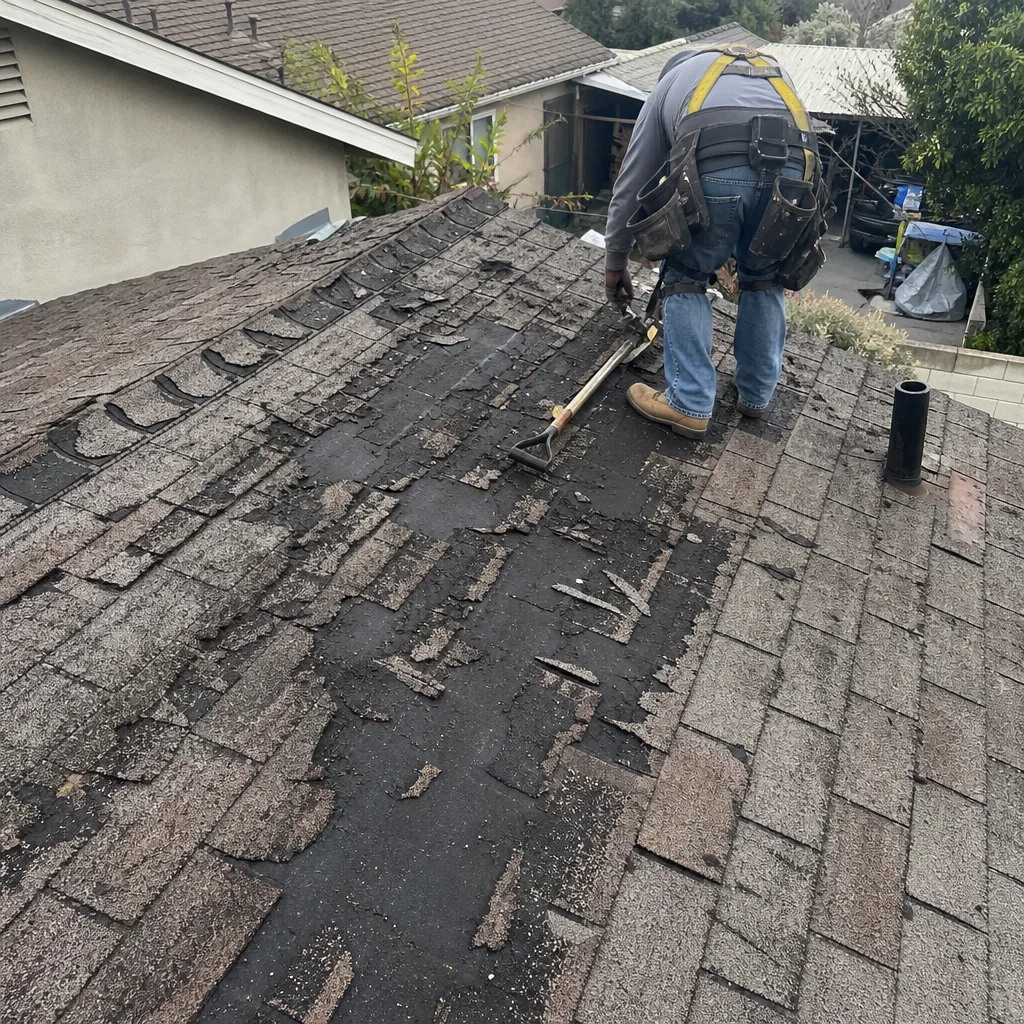 Before
 After
 Before
 After
 Before
 After