
Last updated October 30, 2026
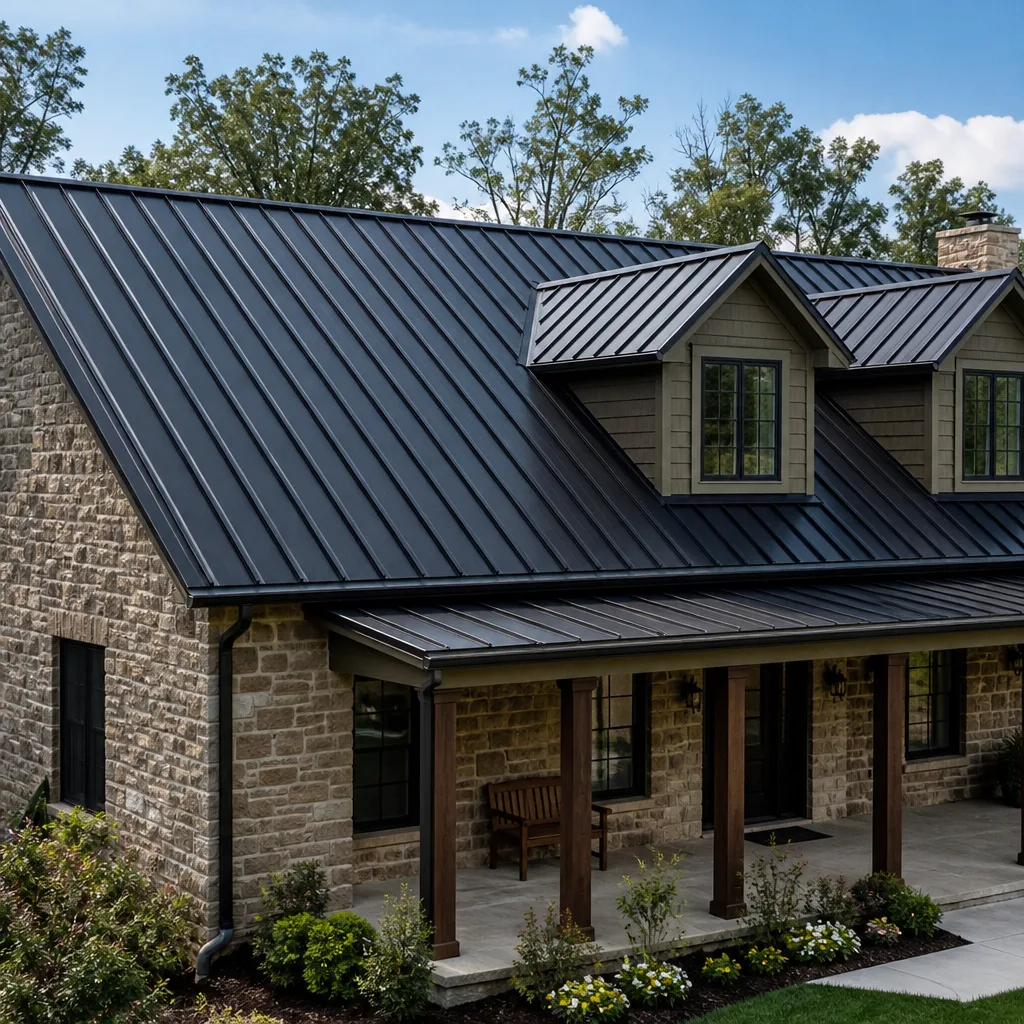 Metal roofing
 Architectural shingles
 Tile roofing
 GAF
 Owens Corning
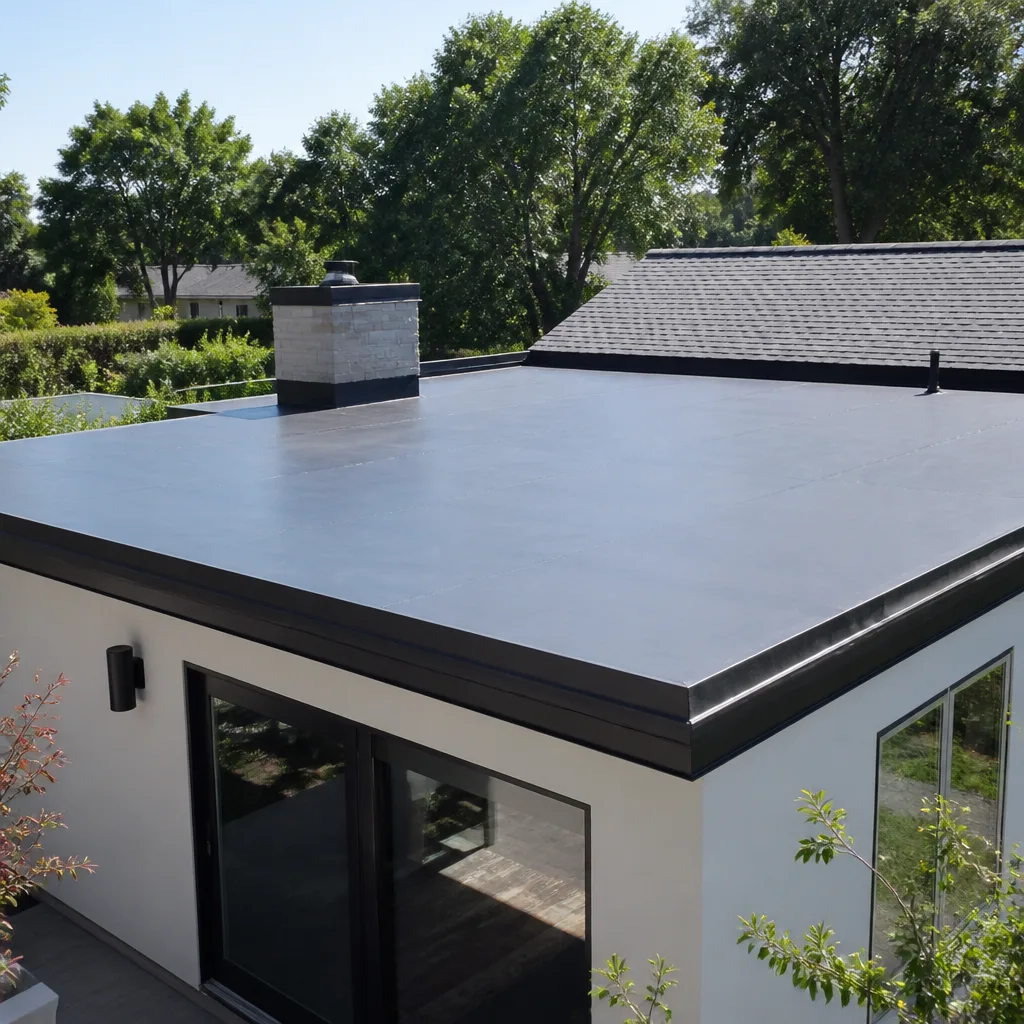 Flat & low-slope
Free roof inspection with deck photos before we talk money - GAF and Owens Corning certified installation
Roofing Warning Signs: A San Bernardino Homeowner’s Reference Guide
Here’s a fact most San Bernardino homeowners don’t learn until it costs them real money: by the time you see a water stain on your ceiling, your roof has been failing for months, sometimes years. The granules washing into your gutter after a Santa Ana wind event aren’t the warning sign. They’re the confirmation. The actual warning was the chalky, balding surface on your shingles you could have caught 18 months earlier if you’d known what to look for. This guide is organized differently than the visual checklists you’ll find elsewhere. Instead of describing damage that’s already progressed, we’re mapping each warning sign to the failure mechanism behind it, so you can recognize the early-stage indicators that are invisible to untrained eyes but obvious to a roofer standing in the right place. If you own a home in San Bernardino, this is the reference you’ll come back to.
Quick Answer
The earliest roof warning signs in San Bernardino rarely appear on the roof itself. They show up in your attic as rafter moisture or staining patterns, in your gutters as granule accumulation or deck sediment, and on your shingles as chalky surface texture or wind-lifted edges that haven’t torn yet. Catching these indicators before interior leaks appear is the difference between a targeted repair and a full roof replacement.
Styles & brands we work with
Table of Contents
- Attic-Side Indicators: What the Exterior Inspection Misses
- Wind Displacement vs. Improper Nailing: Why the Cause Changes Everything
- Concrete Tile Warning Signs Specific to Inland Empire Heat
- Gutter and Fascia Signals That Precede Interior Leaks
- Repair vs. Replacement: Where the Deck Condition Draws the Line
- Granule Loss: The Confirmation That UV Protection Is Already Gone
- Flashing Failures: The Most Misdiagnosed Warning Sign on Any Roof
- Common Mistakes to Avoid
- When to Call a Professional
- Frequently Asked Questions
Attic-Side Indicators: What the Exterior Inspection Misses
Here’s the thing about roof inspections that nobody tells you: the most revealing evidence is almost never visible from the ground, and often not even from the roof surface itself. The attic tells the truth. Every roofer who has spent time in San Bernardino attics knows this. The underside of your roof deck is a recording device, documenting moisture events, ventilation failures, and slow leaks long before they ever reach your drywall. If you want to catch a problem early, this is where you start.
Before we get into what to look for, understand this: attic inspection requires safe access, adequate lighting, and a stable walking path. If your attic has blown-in insulation covering the joists, do not attempt to walk through it. We mention this because we’ve seen too many homeowners fall through ceilings trying to save money on an inspection. Call a professional if access is difficult. That said, here’s what we’re looking for when we inspect an attic in San Bernardino:
- Rafter moisture staining. Dark, irregular streaking on rafters or the underside of decking indicates past or active moisture. Crucially, the location of the stain maps directly to an exterior source. Staining near the ridge suggests a ridge cap issue. Staining near the eaves points to a gutter or ice dam problem. Staining in a vertical line down a rafter often traces back to a nail that’s backing out through a shingle above.
- Daylight penetration points. In a dark attic, any pinprick of light coming through the deck is a hole. Full stop. Each light point is a future water entry point. We map these during inspections because a cluster of daylight points in one area usually indicates a failed section of underlayment, not a single isolated puncture.
- Deck delamination or sagging. The deck is the plywood or OSB layer beneath your roofing material. If it’s delaminating (layers separating) or visibly sagging between rafters, moisture has been at work for a while. In San Bernardino’s dry climate, deck deterioration takes longer than in coastal areas, which means if you’re seeing it, the problem is old.
- Insulation matting or compression. Wet insulation loses its loft and mats down. If your attic insulation looks flattened in specific areas, especially under the deck seams, you’re looking at a leak that’s been dripping slowly enough to never show on a ceiling.
- Ventilation evidence. Attics in San Bernardino summers routinely hit 140 degrees. Proper ventilation matters. If you see rust on exposed nail points protruding through the deck, that’s condensation, not leaking. It signals a ventilation problem that will shorten shingle life from the underside.
These attic-side indicators are the reason we insist on inspecting before recommending. A shingle might look fine from above while the deck beneath it is quietly failing. If you’re buying or selling a home in San Bernardino, an attic inspection is the highest-value hour you can spend before any repair conversation begins. Our Roof Inspection in San Bernardino is designed around this exact process.
Wind Displacement vs. Improper Nailing: Why the Cause Changes Everything
This is one of the most misdiagnosed conditions we encounter in San Bernardino, and the distinction matters because it determines whether you’re filing a manufacturer warranty claim or addressing a contractor error. Santa Ana winds regularly hit 50 to 70 mph through the Cajon Pass, and those wind events expose nailing failures fast. But wind damage and improper nailing look similar from the ground. They are not the same thing, and treating them as interchangeable leads to wasted repairs.
Here’s how to distinguish the two:
- Wind-caused displacement typically lifts shingles in a uniform pattern along the windward slope. You’ll see shingles flipped up or creased along a consistent line, often with granule loss at the crease point. The shingle tabs themselves are still sealed or partially sealed. The failure is adhesive and mechanical from uplift force.
- Improper nailing shows up as shingles that have slid out of position, not flipped up. Nails driven too high (above the nail line), too shallow, or at an angle don’t hold. You’ll see shingles that appear to have “slipped” downward, leaving exposed nail heads from the shingle above. In severe cases, whole courses slide as a group. This is a workmanship failure, and it is not a manufacturer problem.
The reason this matters in San Bernardino specifically: our wind events are episodic and directional. If a roof loses shingles every time the Santa Anas blow, and the loss is always on the same slope, the nailing pattern was wrong from day one. A properly nailed roof in this climate should survive 70 mph gusts without shingle loss. If yours doesn’t, you need a roofer who can document the nailing pattern and tell you honestly whether the original install was defective.
Our team performs Roof Repair in San Bernardino with this distinction in mind from the first shingle we lift. We’re not there to confirm what you already think is wrong. We’re there to identify what’s actually wrong, because the right fix depends on the right diagnosis. When we work with GAF, CertainTeed, or Owens Corning materials on a repair, we’re matching the existing system’s specifications, not guessing.
Concrete Tile Warning Signs Specific to Inland Empire Heat
Concrete tile roofs are common throughout San Bernardino, and they fail differently than asphalt shingle roofs. The tile itself is not waterproof. Never has been. The waterproofing layer is the underlayment beneath the tile, and in our climate, that underlayment is fighting a war against dry heat, UV exposure at the tile gaps, and the slow breakdown of the materials between the tile and the deck. Here are the tile-specific warning signs most homeowners miss.
Hairline Cracks at Nose Tabs
The nose tab is the lower edge of the tile where it rests on the course below. Hairline cracks here are the earliest structural failure in concrete tile. They start as stress cracks from thermal cycling, invisible from the ground, and they widen over years. A cracked nose tab doesn’t immediately leak, but it does expose the underlayment below to direct sunlight through the gap, accelerating underlayment dryout. If you’re seeing multiple tiles with hairline cracking, the roof’s protective system is degrading faster than the tile alone would suggest.
Color Fade Patterns That Signal Underlayment Dryout
Here’s a pattern we’ve learned to recognize in the Inland Empire: tile color fading is normal over 20 years. But uneven fading, where tiles fade faster in specific areas (often the western and southern exposures), correlates with underlayment dryout. Why? Because faded tiles are absorbing more heat, which raises the microclimate temperature at the underlayment layer, which accelerates the breakdown of the felt or synthetic underlayment. The tile is acting as a heat sink, cooking the waterproof layer from above. When faded tiles also show granule loss on the underside (visible only from the attic or when a tile is lifted), the underlayment is already compromised.
Mortar Joint Separation at Hips and Ridges
The mortar along tile hips and ridges doesn’t silently crack overnight. It starts with hairline separation at the joints, often on the western exposure first, where the daily thermal swing is most extreme. Once separation exceeds about 1/8 inch, water intrusion begins at the joint, and the ridge cap becomes the first point of failure. If you have a concrete tile roof in San Bernardino, walk your property line and look at the ridge from the ground with binoculars. Check the mortar joints. Hairline separation is repairable. Crumbling mortar with displaced tiles is a sign the ridge has already started abandoning its job.
Tile roofing also involves brand-specific considerations. We work with Boral and IKO tile products, among others, because different tile profiles have different underlayment requirements. The right material for your roof depends on what’s already up there, not on what’s convenient to stock.
Gutter and Fascia Signals That Precede Interior Leaks
Your gutters and fascia boards are the canaries in the coal mine for roof deck moisture. Long before water finds a path through your ceiling, it leaves evidence at the roof’s edge. Here’s what to look for in San Bernardino, where our rain comes in short, intense bursts between long dry spells.
Sediment accumulation in gutters. This is the one most people miss entirely. Granules in gutters get all the attention, but look closer. If you’re finding sandy, fine sediment mixed with organic debris in your gutters, that’s decomposed shingle material, not just asphalt granules. Granules are the hard mineral surface. Sediment is the shingle’s internal structure breaking down. Sediment means the shingle matrix itself is failing.
Fascia board staining at gutter attachments. When gutters overflow during heavy rain, water runs down the fascia. The recurring wet spot leaves a stain pattern that persists through dry weather. If you see staining at the top edge of fascia boards, especially near inside corners, your gutter system is not managing the volume of water your roof delivers during San Bernardino downpours. That water is migrating backward toward the deck edge.
Peeling paint or soft spots on fascia. Paint failure isolated to specific areas of the fascia, not uniform sun fading, indicates moisture wicking through the board. Test with a screwdriver: if the wood feels soft or spongy, the board has been wet repeatedly. The water source is usually a failed drip edge or a shingle overhang that’s too short.
Granule accumulation at gutter seams. When granules collect specifically at the seams and end caps of gutters, rather than spread evenly along the run, the roof slope is directing concentrated runoff to those points. Heavy granule loss concentrated at one location means the shingles on that slope section are failing faster than the rest of the roof. We see this frequently on the south and west-facing slopes of San Bernardino homes, where UV exposure peaks.
These edge conditions are exactly what we check during any Roof Inspection in San Bernardino because they tell us where the roof is going before the interior ever knows there’s a problem. From the ridge cap down, the whole system leaves a trace. You just need to know where to look.
Repair vs. Replacement: Where the Deck Condition Draws the Line
Every homeowner wants to know the same thing when a warning sign appears: can this be repaired, or am I looking at a full replacement? The honest answer is that the shingles don’t decide. The deck does.
The roof deck is the structural layer everything attaches to. If the deck is sound, a targeted repair is usually viable. If the deck has begun to fail, replacement territory has already been crossed, because you cannot install new roofing over a compromised structural layer. Here’s the framework we use, and it’s the same framework you should apply when evaluating any roofer’s recommendation.
- Deck integrity test. If the plywood or OSB is solid, with no delamination and no moisture-weakened sections, repair is on the table. This is a physical check, not a visual guess. We lift shingles and probe the deck in the affected area.
- Moisture mapping. Using a moisture meter, we map the extent of any water that has reached the deck. If moisture is contained to a small area, the repair stays a repair. If moisture has spread across multiple rafter bays, the repair area expands proportionally, and at a certain point, replacement is the more honest recommendation.
- Fastener integrity. If the deck is sound but the fasteners throughout the roof are failing (nails backing out across multiple slopes), repair becomes a game of whack-a-mole. You’re not fixing a problem; you’re chasing one. This is when we have the replacement conversation.
- Underlayment condition. When we lift shingles for a repair and find the underlayment is brittle, cracked, or disintegrating, the repair is possible but its lifespan is limited by the oldest layer in the system. We’ll tell you that directly.
- Code compliance implications. San Bernardino building codes require repairs to meet current standards for the components being touched. If a repair triggers requirements that can only be met by extending the scope, that’s a factor in the repair-versus-replace decision. We’ll walk you through what the code actually requires, not what a salesperson thinks it requires.
This decision framework is why we say repair when it makes sense, replace when it doesn’t. It’s not a slogan. It’s a description of how the deck condition drives the answer. When replacement is genuinely the right call, our Roof Replacement in San Bernardino work starts from the same inspection findings, so there’s no gap between what we documented and what gets done.
Granule Loss: The Confirmation That UV Protection Is Already Gone
Everyone knows shingles have granules. Almost nobody knows what granules actually do. They’re not decorative. They’re a UV shield. The asphalt layer beneath them is photosensitive. It breaks down under direct sun exposure. Granules absorb and deflect that UV energy, extending asphalt shingle life from roughly 5 years to 20-plus. When granules are gone, the clock is already running.
Granule loss in your gutters is not a warning sign. It’s a confirmation. The warning was the chalky surface on the shingles, visible 12 to 18 months before granule loss became detectable in the gutter. That chalky appearance is the asphalt’s surface beginning to oxidize as granule coverage thins. By the time granules are washing down the downspout, the UV protection on those shingles is materially compromised.
In San Bernardino, with our 280-plus days of sunshine annually, this timeline compresses. UV exposure here is among the highest in the state for residential roofing. South and west-facing slopes lose granules first. If you see granule accumulation in your gutters, you’re not looking for the problem. You’re looking at evidence the problem has been developing for over a year. The right time to act was when the shingles showed that chalky, weathered surface but were still granule-covered. The second right time is now.
This is where material knowledge matters. CertainTeed and Owens Corning both engineer their granule adhesion differently, and some asphalt shingle lines handle Inland Empire UV better than others. When we recommend a product, it’s driven by what your specific roof slope and orientation demand. Seven manufacturers. One crew. The recommendation comes from the job’s needs, not from a warehouse inventory number.
Flashing Failures: The Most Misdiagnosed Warning Sign on Any Roof
Here’s a statistic we’ve observed across years of San Bernardino roof work: the majority of residential roof leaks are not caused by shingle failure. They’re caused by flashing failures. Flashing is the metal material that protects the joints where the roof meets a vertical surface: chimneys, walls, vents, skylights, and valleys. When flashing fails, water gets in even if every shingle on the roof is in perfect condition.
The problem is that flashing failure often mimics shingle failure from inside the house. Water stains on the ceiling near a chimney are usually assumed to be the shingles around the chimney. More often, it’s the step flashing behind the chimney that has separated, or the counterflashing that’s pulling away from the mortar joints. Here’s what to check:
- Valley flashing. Look at your roof valleys from the ground. If you see exposed nail heads in the valley metal, that’s a failure point. Valley metal should never be face-nailed. If it is, every one of those nails is a leak waiting for the next rain.
- Chimney flashing. Check the junction where the chimney meets the roof. Separation between the counterflashing and the mortar is the earliest visible sign. When the gap exceeds 1/16 inch, water is entering. Repointing the mortar and re-securing the flashing is a repair, not a replacement, if caught early.
- Vent pipe boots. The rubber boot around plumbing vent pipes degrades in San Bernardino’s heat faster than in milder climates. A cracked boot lets water run directly down the pipe and into the attic. This is a $200 repair that prevents a $2,000 ceiling repair. Check yours annually.
- Wall step flashing. Where a roof meets a stucco or siding wall, step flashing is layered between each shingle course. If the siding or stucco at the intersection shows staining, the flashing behind it is failing. This one rarely gets caught early because it looks like a wall problem, not a roof problem.
Flashing failures are the reason a roof inspection is not a shingle inspection. When we inspect, we’re mapping every transition point on the roof, because that’s where failure begins. This is also where the Ridge Cap approach differs from a crew that only looks at the field shingles and calls it good. Ridge Cap Roof Repair home is built on this attention to detail, because the ridge cap is the highest, most exposed, hardest-wearing detail on any roof, and it’s where other crews rush.
Common Mistakes to Avoid
- Ignoring attic evidence because the ceiling looks fine. By the time water reaches the drywall, the structural deck has been wet for months. The ceiling is the last place a leak appears, not the first. If your attic shows any of the indicators we described, act before the ceiling joins the conversation.
- Treating granule loss as the first warning sign. As we’ve explained, granules in the gutter are confirmation, not warning. If you wait for granule loss before acting, you’ve missed the repair window on those shingles and the underlayment has probably already lost integrity.
- Assuming wind damage is a manufacturer warranty issue. Improper nailing is not a manufacturing defect. If your shingles are sliding rather than flipping, the manufacturer is not responsible. Document the nailing pattern before filing any claim.
- Painting over fascia staining instead of finding the source. Paint hides the evidence for a season or two. It doesn’t stop the water that caused it. Find the source first. Then paint.
- Replacing shingles over a compromised deck. New shingles over a soft deck is a temporary fix that costs more in the long run. The deck condition determines whether repair or replacement is appropriate. If a roofer hasn’t checked the deck, they haven’t actually assessed your roof.
- Walking on a concrete tile roof to inspect it. Concrete tile cracks under foot traffic. Every time a homeowner walks a tile roof, they create new damage. Use binoculars from the ground or call a professional who knows how to move on tile without breaking it.
- Deferring flashing inspection because the shingles look fine. Flashing failure is the leading cause of residential leaks in San Bernardino. The shingles can be brand new and the roof still leaks if the flashing wasn’t addressed. This is the most expensive mistake on this list.
When to Call a Professional
Any of the warning signs in this guide warrants a professional assessment. But some situations demand it sooner than others. If you see daylight through your roof deck, call this week. If you have active water intrusion during or after rain, call before the next storm. If a home inspection flagged roof conditions before a purchase or sale, call before closing. If your concrete tile roof shows mortar separation at the ridge, call before the next Santa Ana season. If your roof is over 15 years old and has never had a documented attic-side inspection, call now. The inspection is not a sales appointment. It’s a fact-finding process, and it’s the cheapest roof work you’ll ever pay for. Ridge Cap Roof Repair offers free estimates in San Bernardino. Call (866) 361-0798 to schedule yours.
Frequently Asked Questions
The most common warning sign in San Bernardino is granule loss on south and west-facing slopes, caused by our high UV exposure. It’s the sign most homeowners ignore because it doesn’t look urgent, but by the time it appears, the shingles have already lost meaningful UV protection and need assessment.
Twice a year, once in spring and once in fall, plus after any major wind event. The spring check catches winter rain damage. The fall check prepares for the rainy season. Here, the wind events matter as much as rain, so an inspection after every significant Santa Ana is not excessive if you have an older roof.
Yes, from the ground and from the attic. Use binoculars to check shingle conditions, flashing, and ridge caps. Check the attic for staining, daylight, and moisture. Do not walk on the roof, especially concrete tile, unless you are trained to move on that surface without causing additional damage.
Inspection pricing varies by roof complexity and access. Some companies charge a flat fee, others credit the inspection cost toward repair or replacement work. Ridge Cap Roof Repair offers free estimates in San Bernardino. Call (866) 361-0798 to schedule one, and we’ll tell you exactly what we found and what’s needed.
Not necessarily. Many warning signs, including flashing failures, isolated granule loss, and specific wind damage, are repairable if the roof deck is still sound. The deck condition is the deciding factor, not the shingle condition. Get an honest assessment of the deck before accepting any replacement recommendation.
Get an independent roof inspection, not just the one provided by the real estate transaction. The finding matters less than the deck condition behind it. We provide Roof Inspection in San Bernardino for sellers, buyers, and agents, and we’ll document everything in writing so the sale conversation is based on facts, not fear.
No. We work with seven major manufacturers, including GAF, CertainTeed, Owens Corning, and IKO. That means our material recommendation is based on your roof’s specific needs, not on what we happen to stock. The right material for your roof, from the ridge cap down.
The Bottom Line
Roof failures in San Bernardino don’t start with water on the ceiling. They start with hairline cracks at tile nose tabs, with chalky shingle surfaces, with sediment in gutters, with rafter staining in the attic, with flashing that’s pulling away from a chimney. These early indicators are visible to anyone who knows where to look, but they’re easy to miss if you’re only checking the roof surface from the ground. The most expensive roof work is the work that’s deferred past the repair window. The cheapest roof work is the inspection that catches the problem while it’s still small. If anything in this guide matches what you’re seeing at your San Bernardino home, call (866) 361-0798 for a free estimate. We’ll tell you what’s actually happening, what it means, and what the right next step is. No fear. No upsell. Just a roofer who noticed what others overlooked.
Written by the team at Ridge Cap Roof Repair, serving San Bernardino since 2018.
See the difference
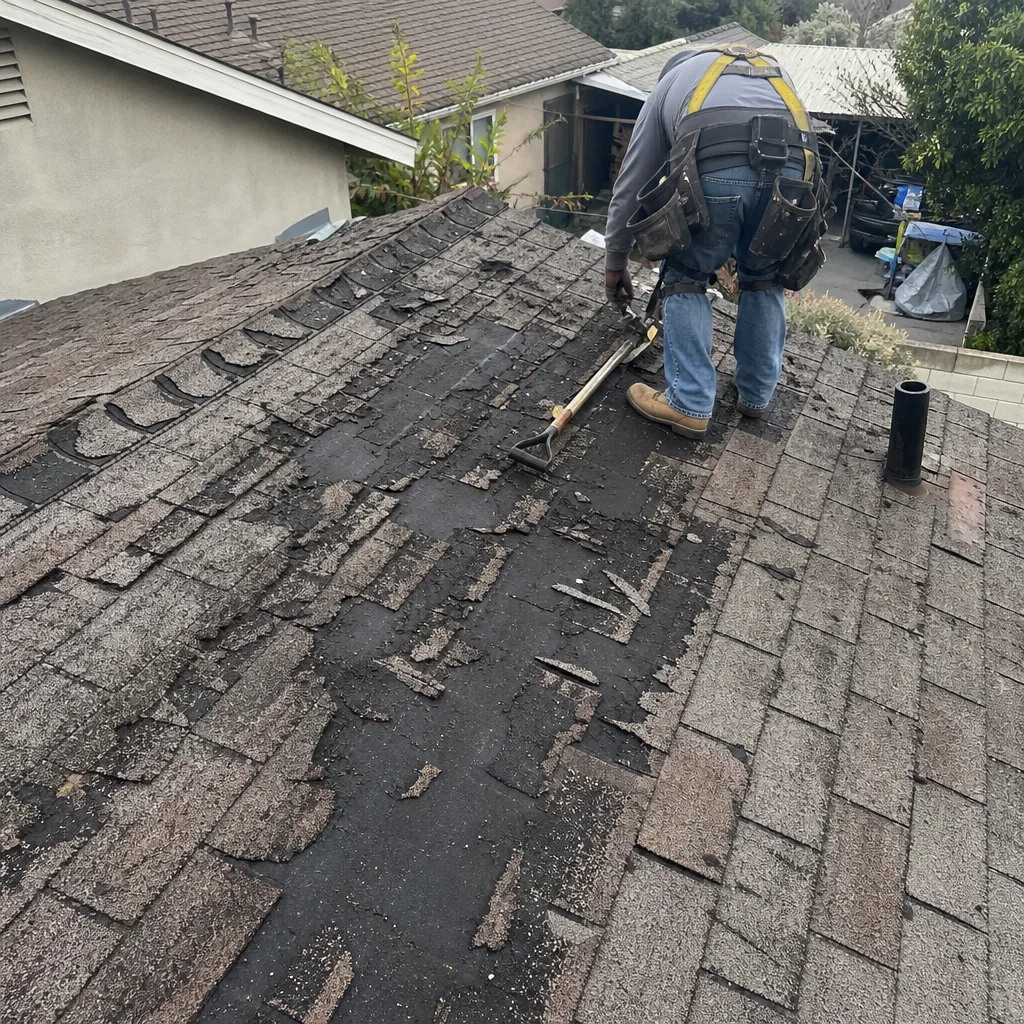 Before
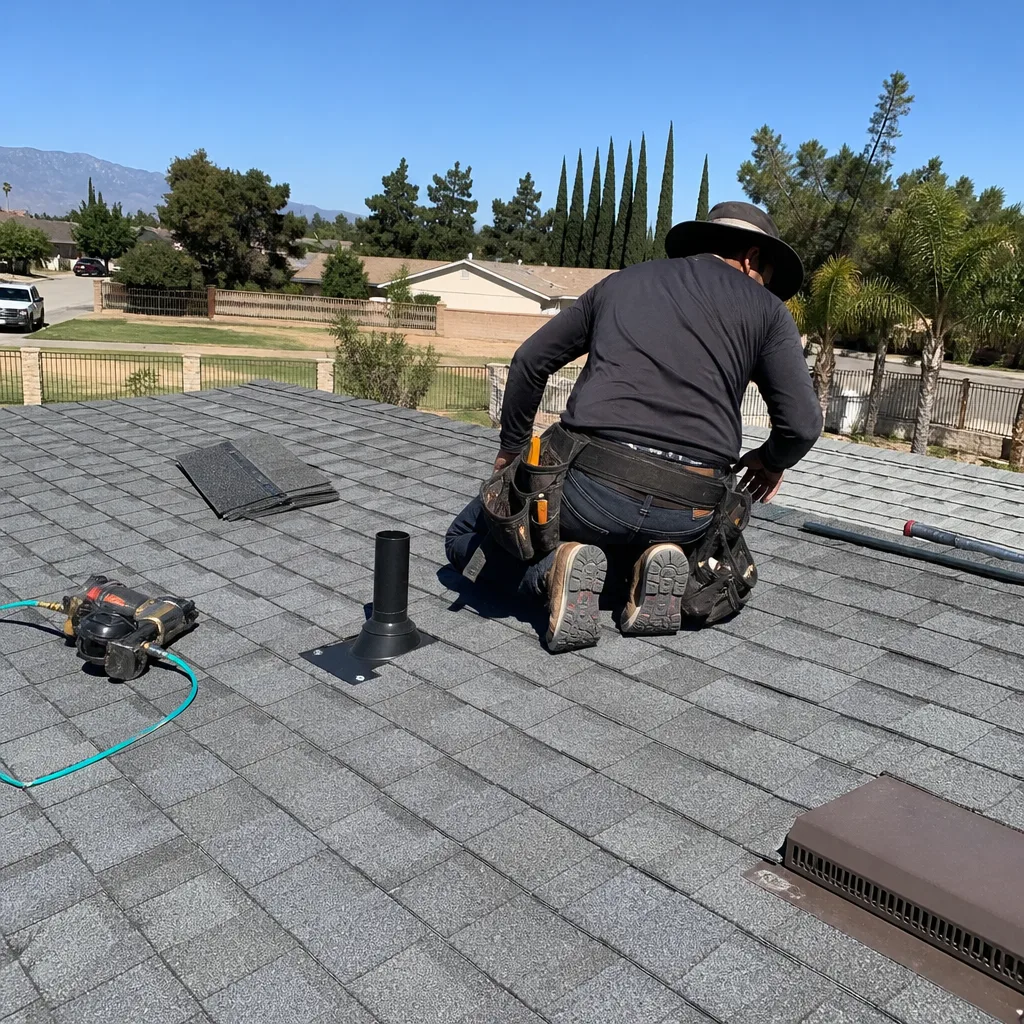 After
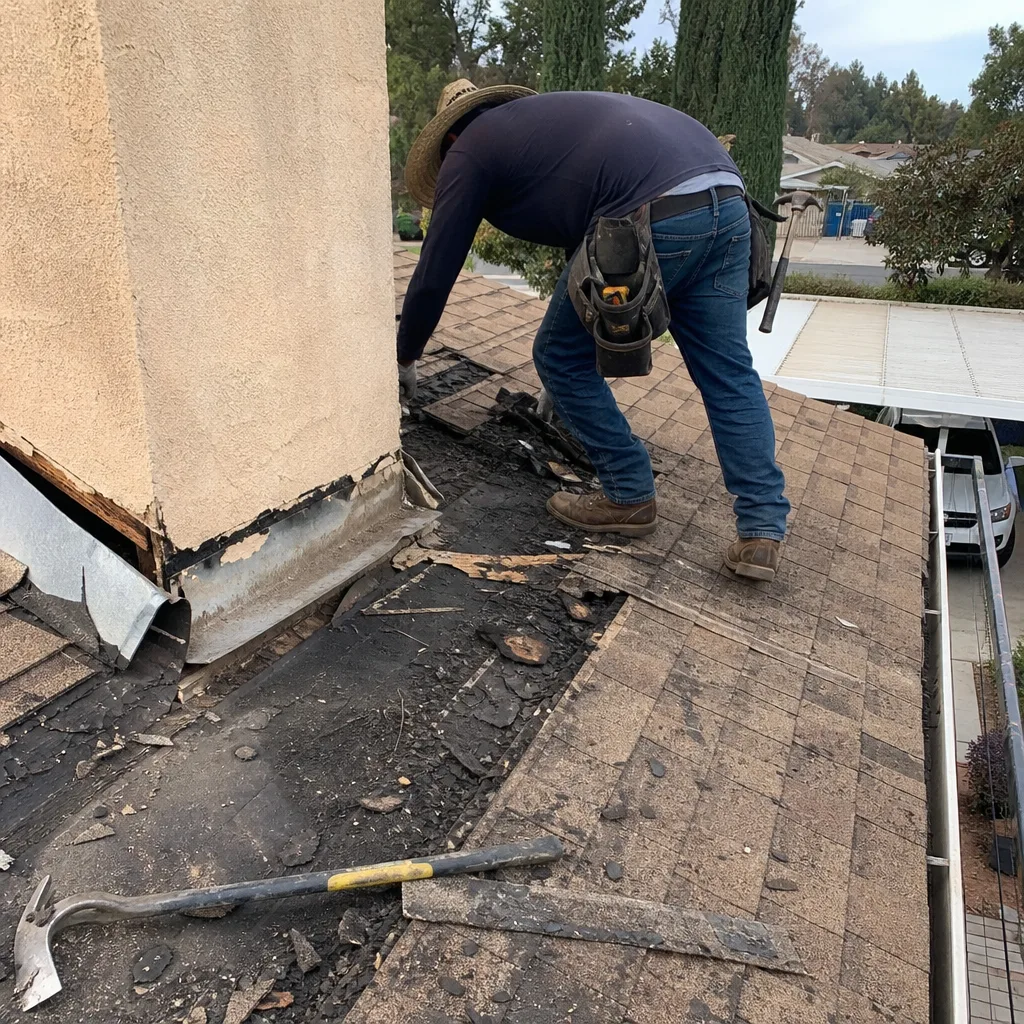 Before
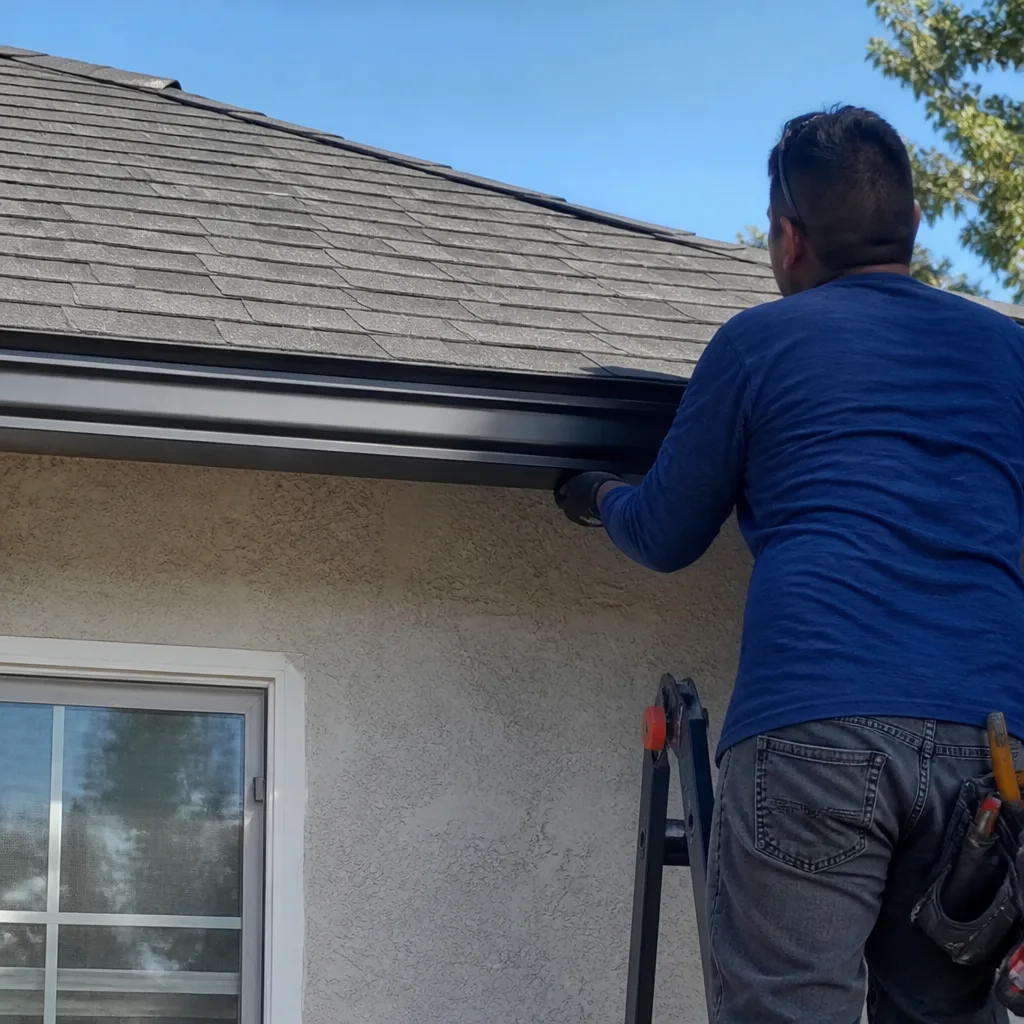 After
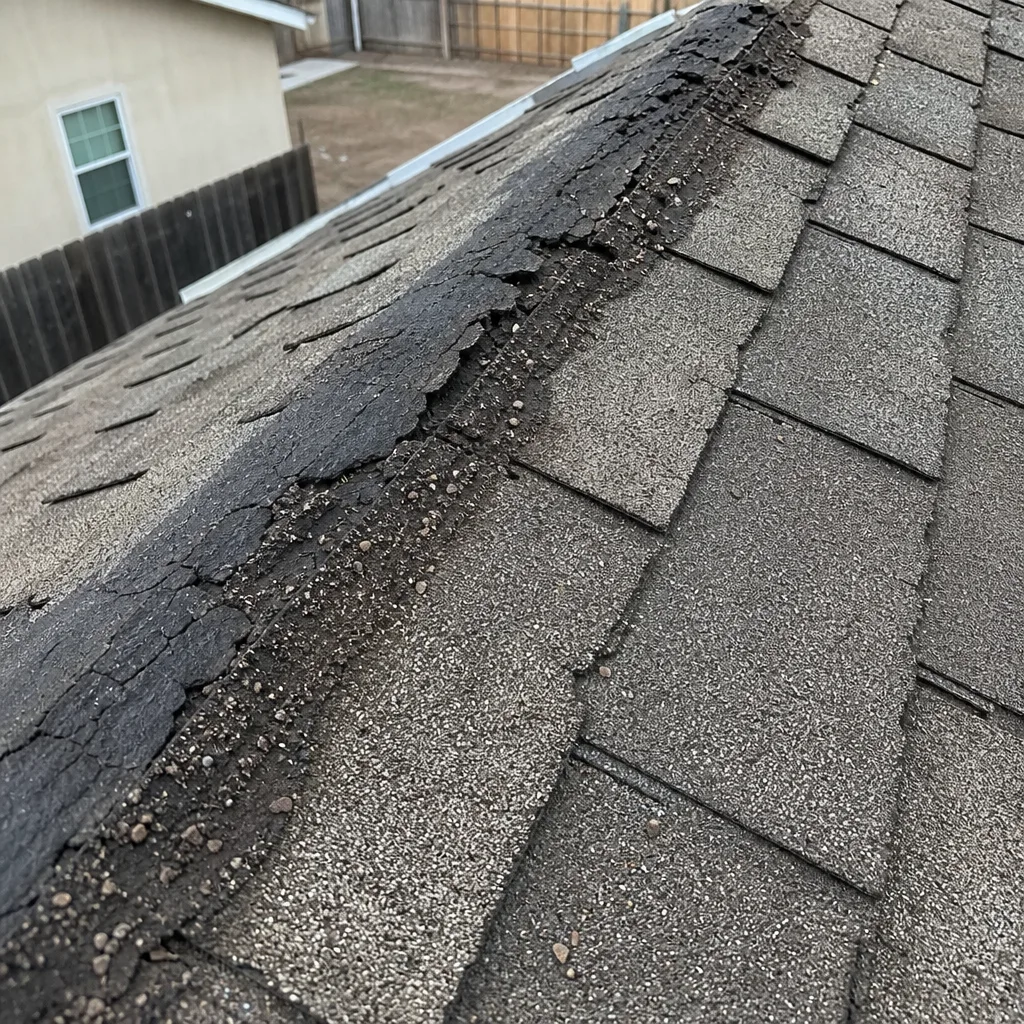 Before
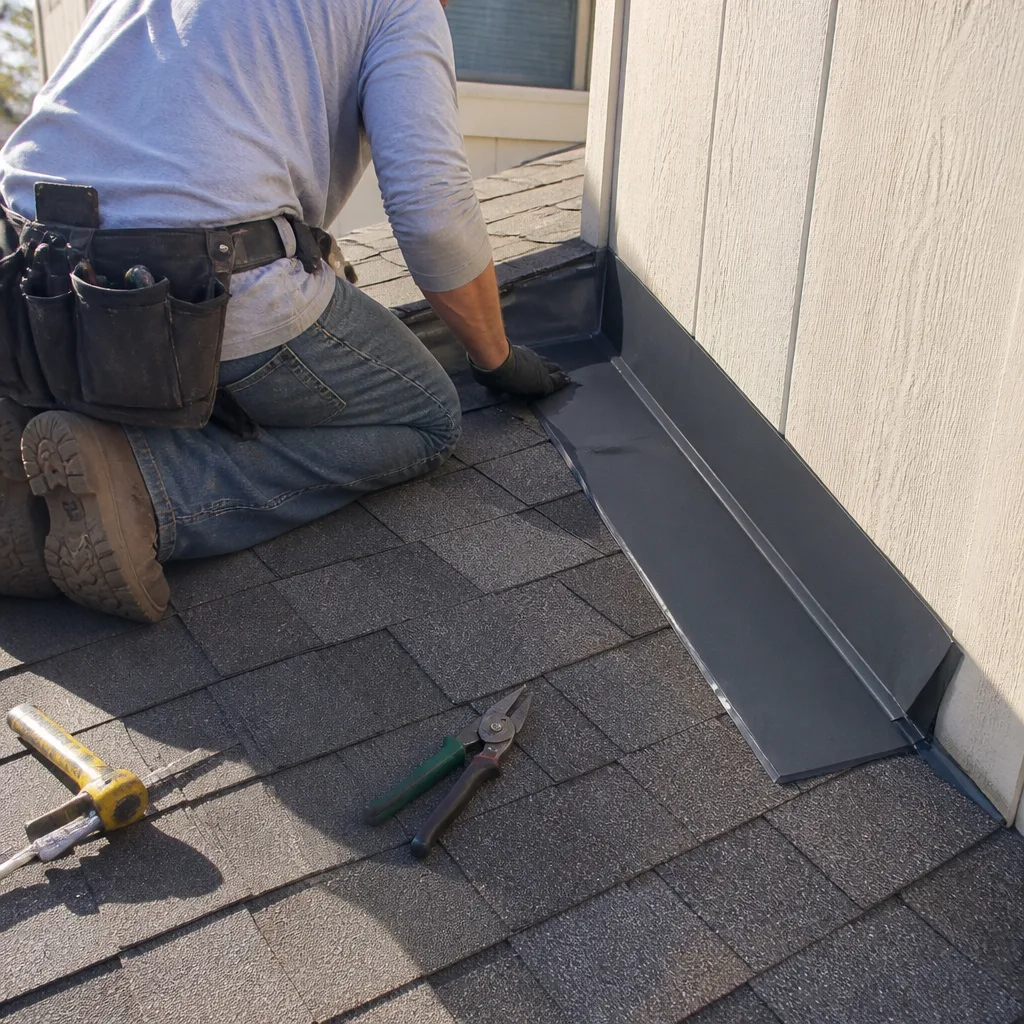 After