Last updated October 30, 2026
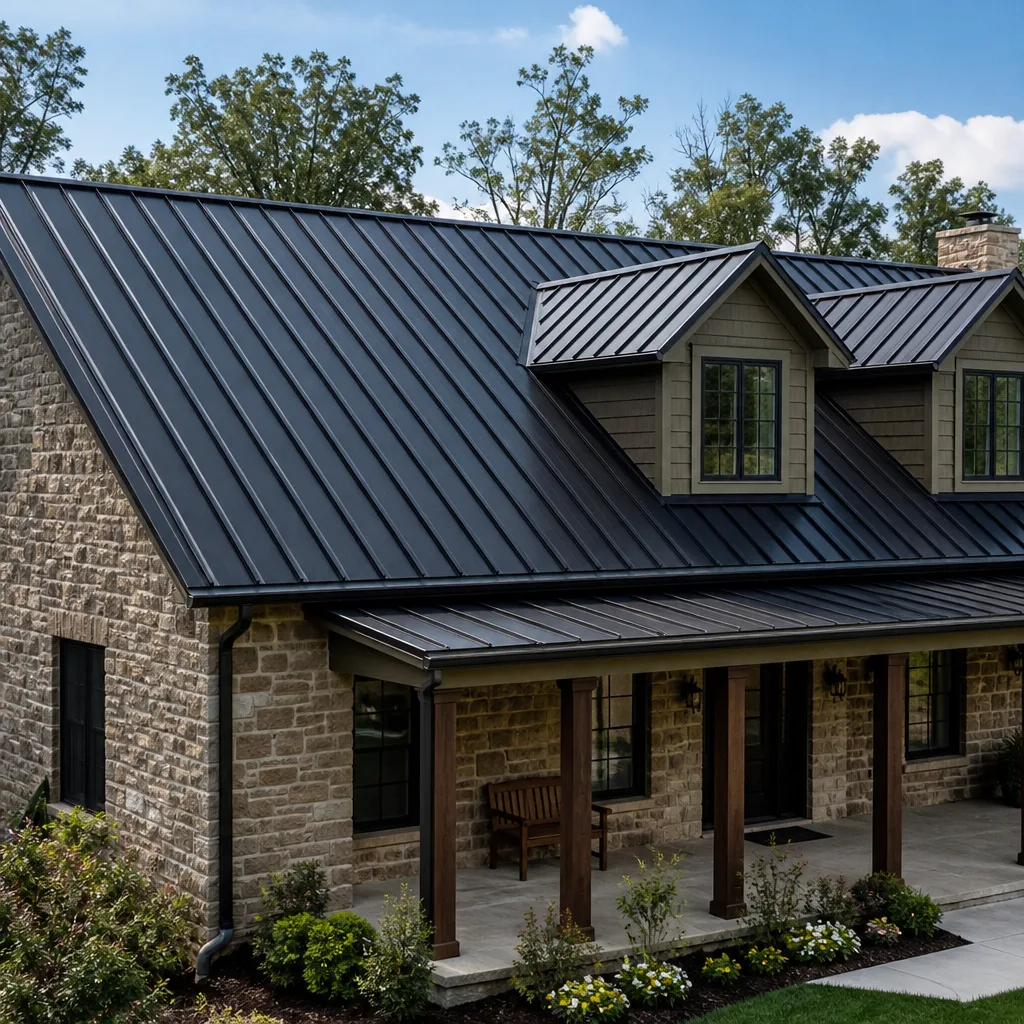 Metal roofing
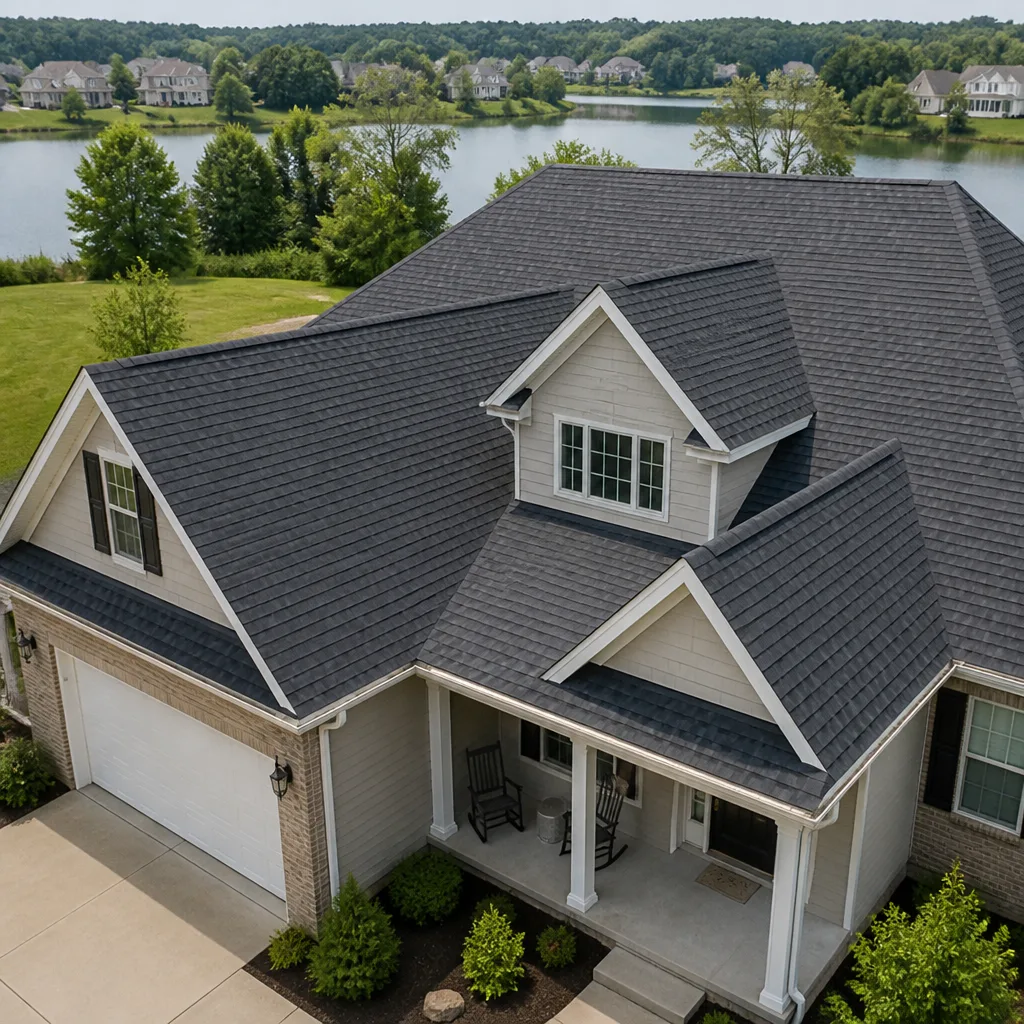
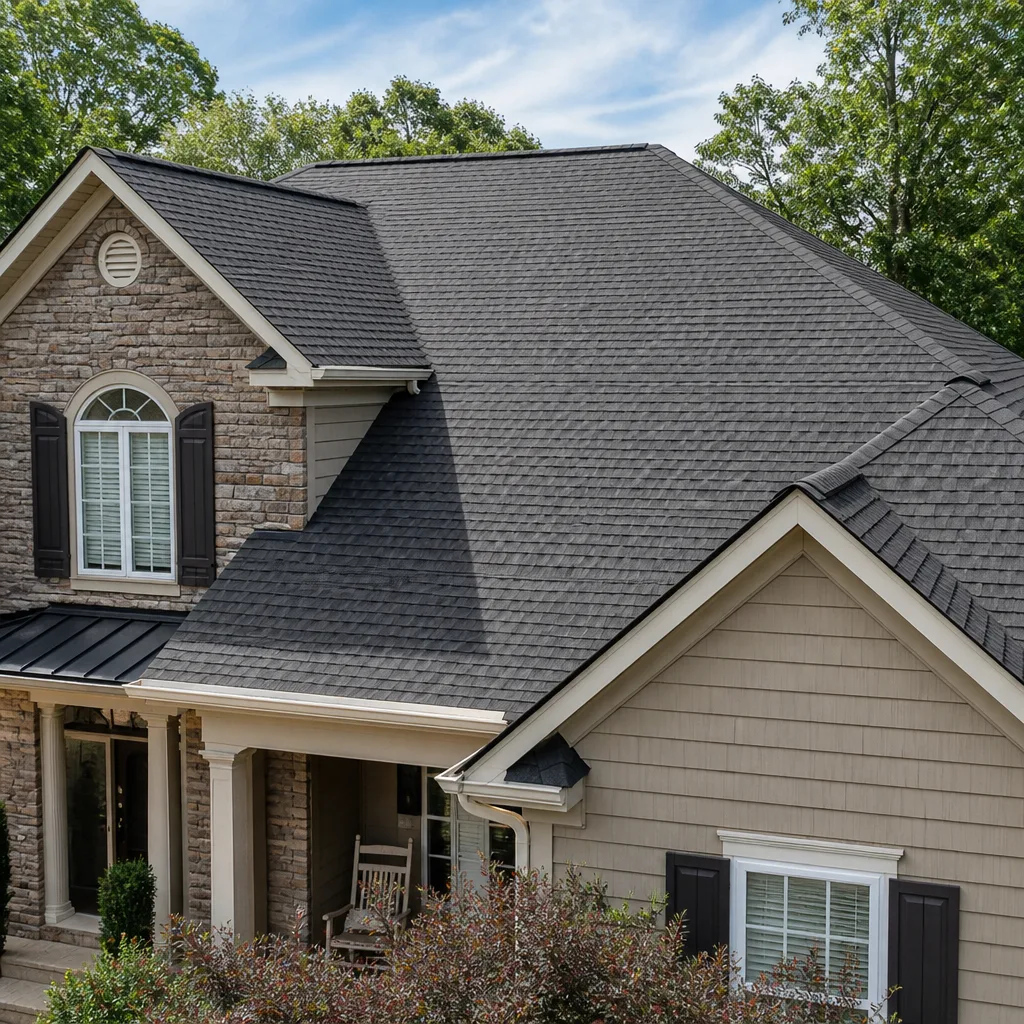 Architectural shingles
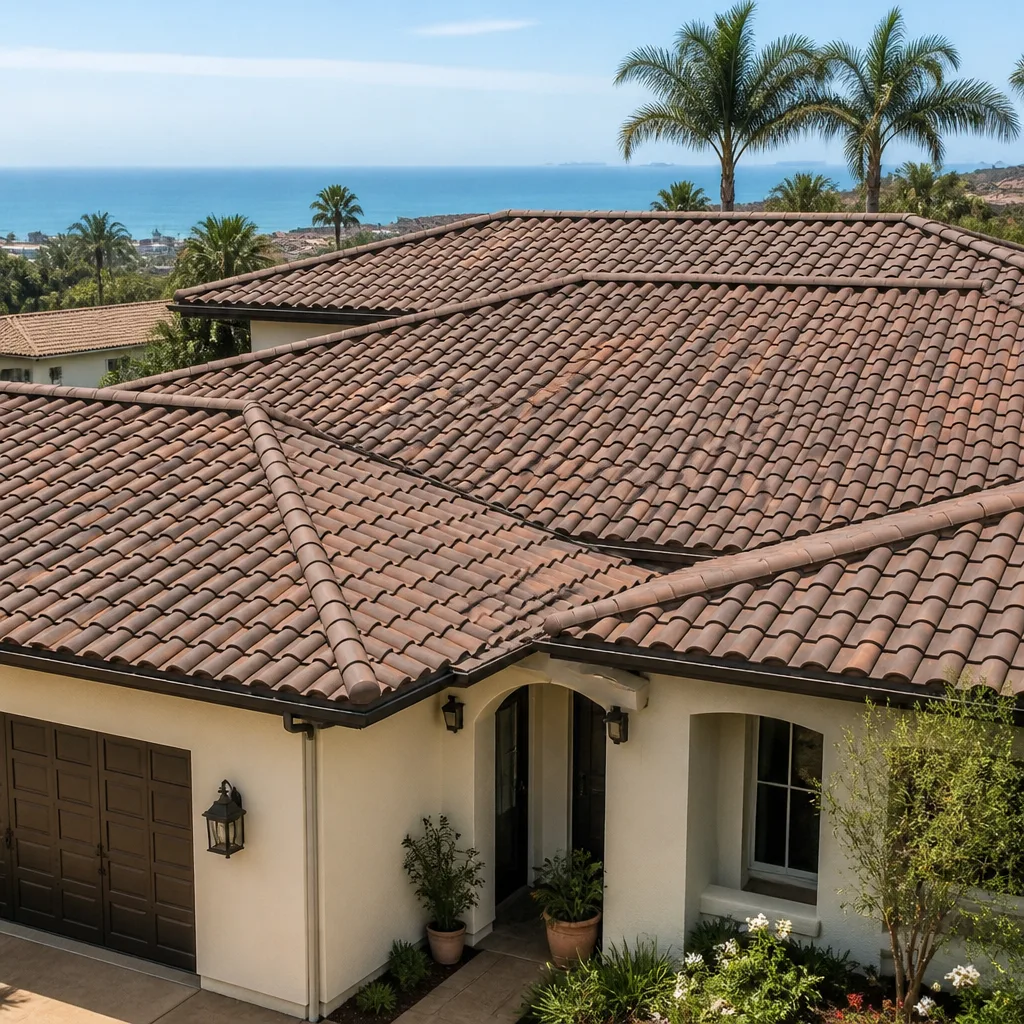 Tile roofing
 GAF
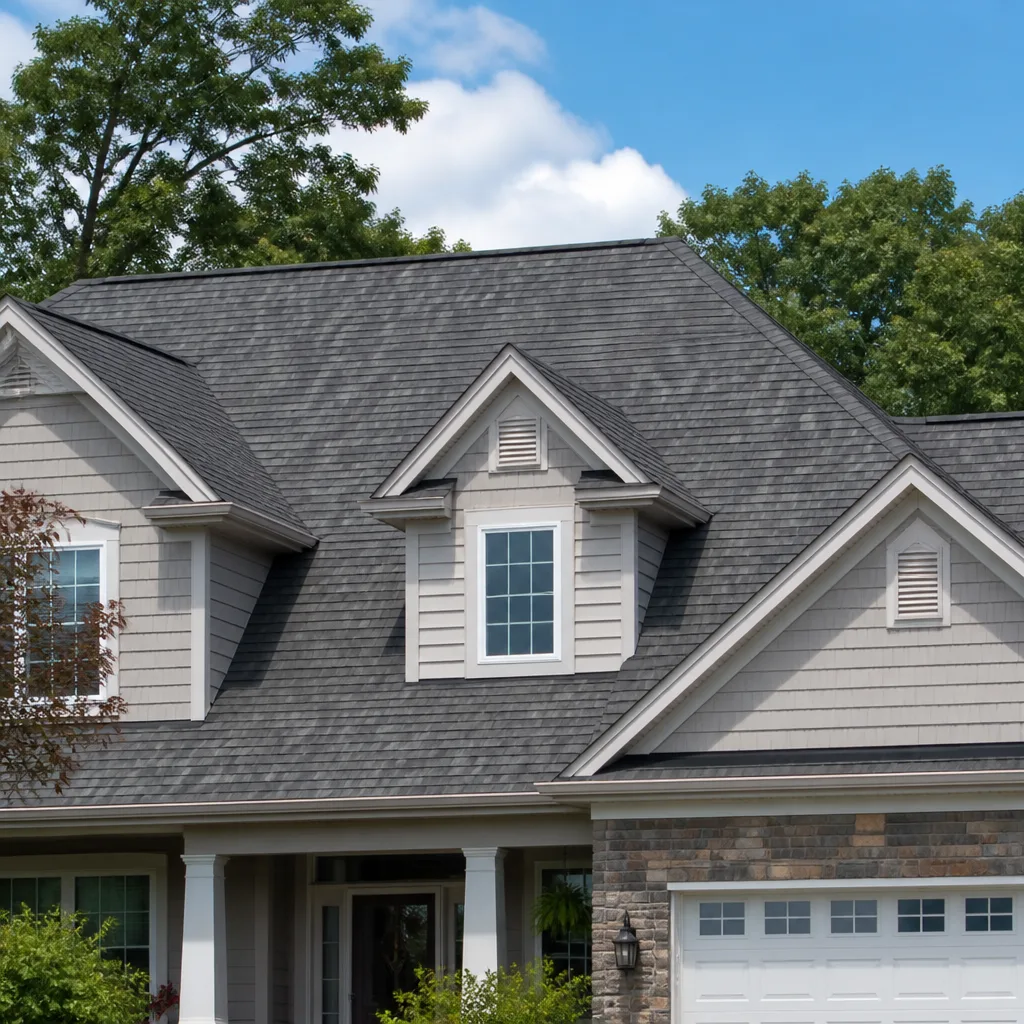 Owens Corning
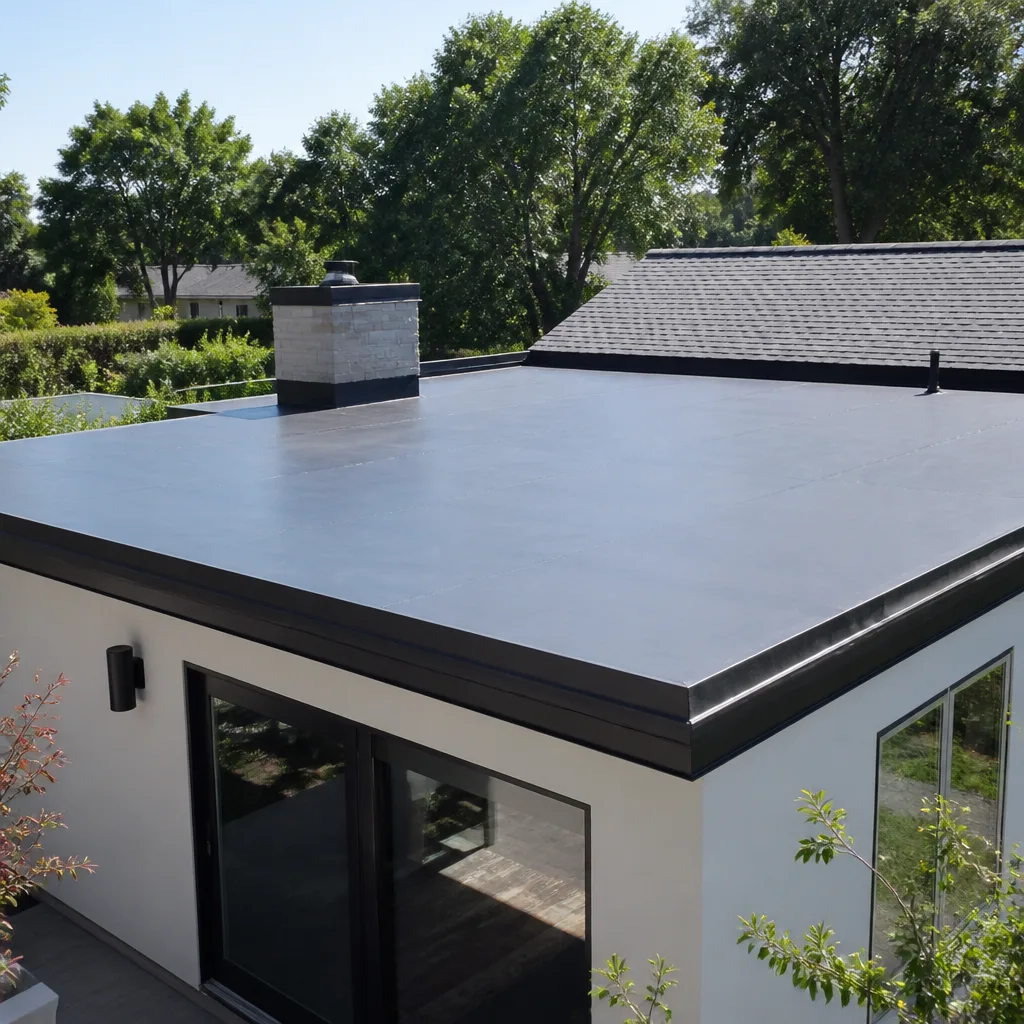 Flat & low-slope
Free roof inspection with deck photos before we talk money - GAF and Owens Corning certified installation
How to Hire a Roofing Contractor in San Bernardino: A Step-by-Step Guide
California’s CSLB license lookup takes 30 seconds and filters out roughly zero of the bad actors working San Bernardino right now. The license database won’t tell you whether a contractor has ever pulled a permit at San Bernardino County’s building department, whether they’ve installed a roof in an HOA community with Title 24 cool-roof requirements, or whether their crew understands how Santa Ana wind events stress fastening patterns on the north slope. Thousands of homes in San Bernardino sit inside HOAs or older neighborhoods with distinct code histories. This guide closes the gap between what the state database verifies and what actually protects your home. You’ll learn how to read a bid line by line, which questions expose whether a roofer has real local experience, and how to spot the storm-chaser patterns that spike after every wind event.
Styles & brands we work with
Quick Answer
Hiring a roofing contractor in San Bernardino means verifying a California CSLB license, then going deeper: demand a line-item bid that distinguishes tear-off from overlay, ask the three job-specific questions that expose real local building-department experience, and confirm the contractor pulls the permit in their name. A legitimate roofer will walk the roof before quoting, document deck condition in writing, and never pressure you to sign before permits are discussed.
Table of Contents
- Step 1: Start With the Roof, Not the Roofer
- Step 2: Verify the License, Then Verify the Local Record
- Step 3: The Three Questions That Expose a Roofer Without San Bernardino Experience
- Step 4: How to Read a Roofing Bid Line by Line
- Step 5: Why Manufacturer Certification Tiers Actually Matter
- Step 6: Red Flags Specific to Post-Santa Ana Solicitation
- Step 7: The Permit Process in San Bernardino County
- Common Mistakes to Avoid
- When to Call a Professional
- Frequently Asked Questions
- The Bottom Line
Step 1: Start With the Roof, Not the Roofer
Most hiring guides tell you to collect three bids first. That’s the wrong order. Before you call anyone, you need to know what you’re actually looking at. Walk your house and note exactly what you see: granule loss in the gutters, curling at the shingle edges, exposed nails on the ridge line, daylight showing through the attic sheathing, water staining on the ceiling that follows a rafter line. Write these down. Take photos from the ground. The more specific your own observations, the harder it is for a bidder to substitute a generic pitch for an actual diagnosis.
Here’s why this matters in San Bernardino specifically. Our climate punishes roofs differently than the coastal cities. We get 100-degree summer stretches that bake shingles and accelerate granule shedding. We get Santa Ana winds in the fall that lift edges and work fasteners loose. We get the occasional cold snap that makes brittle, sun-damaged shingles crack. A roof that fails in San Bernardino usually shows a specific failure pattern tied to one of these forces. Knowing whether your issue is wind-related edge lift versus heat-related thermal cracking changes which repair approach makes sense, and it tells you immediately whether a bidder is looking at your roof or looking at a sales script.
At Ridge Cap Roof Repair home, we inspect before we recommend. That’s not a tagline, it’s the order of operations. If a contractor quotes you a full replacement without walking the roof and documenting what they saw, you haven’t received a bid. You’ve received a sales pitch.
Step 2: Verify the License, Then Verify the Local Record
The CSLB license check is step one of a two-step verification. Everyone knows to do it. Few know what it doesn’t tell you. A license tells you the contractor is registered with the state and carries the minimum bond. It does not tell you whether they’ve ever worked in San Bernardino’s building department, whether they’ve navigated an HOA submittal package, or whether their crew understands the wind-uplift requirements that apply to our specific exposure areas. All three of those gaps matter here in ways they don’t in other markets.
Start with the license. The CSLB website lets you check that the license is active and that the name on the license matches the name on the bid. While you’re there, check the contractor’s workers’ compensation status. A roofer without workers’ comp coverage passes injury liability directly to you as the homeowner. If a worker falls off your roof and the contractor has no coverage, your homeowner’s insurance is the target. That’s a non-negotiable verification step we recommend for every homeowner in San Bernardino, no exceptions.
Then go further. Ask the contractor directly: “What’s the last project you permitted in San Bernardino County?” A roofer with real local experience can answer that question with a neighborhood, a building-department interaction, and a timeline. A storm chaser will give you a vague answer about “lots of homes in the area.” The specificity of the answer is the test.
Step 3: The Three Questions That Expose a Roofer Without San Bernardino Experience
Here’s the contractor-side test most guides skip. A licensed roofer from Riverside or Ontario can pass a CSLB check, but that doesn’t mean they know how San Bernardino’s specific requirements work. Ask these three questions to every bidder who walks your property. All three are answerable by anyone who has actually done permitted roofing work in this city. None of them are hard to answer for a roofer with local history.
Question 1: “What’s the cool-roof requirement for my roof zone, and does my HOA have anything to say about it?”
San Bernardino sits in Inland Empire climate zones that trigger Title 24 cool-roof standards for many re-roof projects. That means specific solar reflectance and thermal emittance values for the shingles or tile you choose. A contractor who has permitted roofs in San Bernardino knows this, and they also know that HOA-governed communities in neighborhoods like Del Rosa, Arrowhead, and North Park add their own material and color restrictions on top of the state code. A roofer who can’t answer this question in the first thirty seconds hasn’t permitted a roof here, or they’re not planning to permit yours either. We work with seven manufacturers, including Owens Corning and Tamko, so when a roof needs a specific material profile to satisfy both code and HOA, the right product is available rather than the one product a single-brand contractor happens to stock.
Question 2: “When you pull the permit, does your name or my name go on it?”
This one question flushes out more problem contractors than any other. The correct answer is their name. The contractor pulls the permit under their license, their bond, and their insurance. The permit holder is the party the building department holds responsible for code compliance and final inspection. If a contractor tells you to pull the permit as the homeowner so they can “save you money,” what they’re actually doing is transferring the compliance risk, and often the liability, onto you. This is one of the easiest red flags to spot, and it’s the one most first-time roofers in San Bernardino never ask.
Question 3: “What’s the nailing pattern you’ll use on my roof, and why does it matter for the wind zone I’m in?”
This is a technical question, and that’s the point. A real roofer will talk to you about six-nail versus four-nail patterns, about ring-shank versus smooth-shank fasteners, about how wind-uplift calculations change depending on your roof’s exposure. San Bernardino’s wind patterns aren’t uniform, and the right fastening scheme is a function of your roof’s slope, height, and exposure direction. A contractor who can’t or won’t discuss nailing patterns at the bid stage is betting you’ll never ask about them after the shingles are on. This is the kind of detail that separates installation crews who care about the ridge cap down from crews who are just trying to finish before the next job.
Step 4: How to Read a Roofing Bid Line by Line
A real roofing bid is a document with scope, materials, labor breakdown, and exclusions. A bad bid is a single number scrawled on a business card. When you receive a written bid for a San Bernardino roofing job, here’s what each major line item should be able to tell you, and what to demand when it doesn’t.
- Tear-off and haul: This is the line item for removing your existing roof down to the deck. If it’s missing, the contractor plans to overlay new shingles on top of old ones. An overlay is cheaper and faster, and it’s almost always the wrong call in San Bernardino. Our climate’s heat cycle accelerates shingle wear, and laying new shingles over old means the new roof inherits every hidden defect in the old deck. Tear-off is the only way to inspect the deck for dry rot, broken sheathing, and fastener failure before new material goes on. If a bid doesn’t include tear-off and haul, ask why. If the answer is “to save you money,” the contractor is trading your roof’s longevity for their convenience.
- Deck inspection and repair: This is the line item that covers what the crew finds when the old roof comes off. A honest bid discloses that deck repair is a possibility and explains how it will be priced if discovered. A suspicious bid omits deck repair entirely, then surprises you with a change order after tear-off. Ask how deck issues are documented and priced. The right answer includes written descriptions and per-sheet pricing, not vague “we’ll see what we find” language.
- Underlayment and flashing: The materials nobody sees are the materials that protect your home. The bid should specify the underlayment type, the flashing details at the valleys, chimneys, and walls, and the ice-and-water barrier at the eaves if your roof has any risk of water intrusion from wind-driven rain. San Bernardino’s dry season doesn’t eliminate wind-driven rain risk. Santa Ana events push water sideways into places standard flashing sometimes misses. Another reason the bid should specify these details rather than gloss over them.
- Manufacturer and shingle line: The bid should name the manufacturer and the specific shingle line, not just a color. “Owens Corning Duration” is a specification. “Architectural shingles, brown” is a placeholder. We install and service products from GAF, CertainTeed, Owens Corning, IKO, Atlas, Tamko, and Boral. The right material for your roof depends on your budget, your HOA’s restrictions, and the specific wind and heat exposure your home faces. When we write a bid, the shingle line is specified with a reason attached, not a default.
- Permit and inspection line: A legitimate bid includes a line item for the building permit and the final inspection. A bid that mentions “permits as needed” or omits them entirely is telling you the contractor doesn’t plan to pull one. We already covered why that’s a problem. On a permitted roofing job in San Bernardino, the building department inspects the work before the project is closed. That inspection is your protection.
- Warranty language: The bid should state what the contractor’s workmanship warranty covers, what the manufacturer’s warranty covers, and for how long. Don’t accept “full warranty” as the entire explanation. Ask for the documents. A real workmanship warranty has terms. A manufacturer warranty has tiers and registration requirements. If the bid won’t document these details, move on to the next contractor.
Step 5: Why Manufacturer Certification Tiers Actually Matter
You’ve probably seen badges: GAF Master Elite, Owens Corning Preferred, CertainTeed Master Shingle Applicator. It’s easy to dismiss these as marketing, but they carry real contractual meaning. Here’s what the tiers actually change for a San Bernardino homeowner.
Manufacturer certification is a signal that a contractor has completed training specific to that manufacturer’s installation requirements and has passed inspections on previous projects. The higher tiers require a track record. More importantly, the top certification tiers unlock warranty enhancements that non-certified contractors cannot offer. A GAF Master Elite contractor can offer the Golden Pledge warranty, which includes workmanship coverage for 25 years on top of the material warranty. An uncertified installer installing the same shingle can only offer the basic material warranty, which covers manufacturer defects in the shingle itself but covers nothing for installation errors.
For a San Bernardino homeowner, that distinction matters more than it does in milder climates because installation error is a common failure mode in high-heat environments. Improper nailing, insufficient ventilation, and bad flashing all show up years before a manufacturer defect would. When the workmanship warranty is backed by the manufacturer through a certification program, you have recourse if the contractor goes out of business. When it’s only backed by the contractor, you’re relying on that contractor still existing in five years. Given how many roofing businesses fold or rebrand after bad years, manufacturer-backed workmanship coverage is worth paying attention to.
We work across seven manufacturers, from GAF and CertainTeed to Roof Replacement in San Bernardino projects that need a specific Atlas, IKO, or Tamko product to match an HOA requirement or a budget. That breadth matters because the right material for your roof isn’t the one a single-brand contractor is trying to move. It’s the one that matches your climate, your exposure, and what you can afford. Seven manufacturers. One crew.
Step 6: Red Flags Specific to Post-Santa Ana Solicitation
Every Santa Ana event brings the same pattern to San Bernardino. Within days, out-of-town crews appear. They work neighborhoods in North Park, Del Rosa, and the areas near the foothills where wind damage is most visible from the street. They knock on doors with clipboards. They say things like “we’re doing work in your neighborhood” and “your insurance will probably cover this.” They offer to “help with your claim.” Here are the specific red flags that separate a legitimate local roofer from a post-storm solicitation crew.
- Door-to-door timing: A legitimate San Bernardino roofing contractor is busy after a wind event, but they’re not cold-knocking. They’re responding to calls. If someone shows up at your door unsolicited the week after a Santa Ana, they’ve come from somewhere else, and they’ll leave as soon as the work dries up. That’s a problem when you need warranty support three years later.
- Vague “insurance specialist” framing: Contractors who position themselves as insurance-claims experts are usually positioning themselves as middlemen between you and your insurer. The ones who do this after storms are often inflated-estimate artists. They write a high estimate, negotiate with your insurer, and pocket the difference. The work suffers. A real roofer fixes the roof and documents the damage accurately. If a contractor’s first question is about your deductible rather than your roof, that’s a signal.
- Pressure to sign before permits are discussed: A storm chaser never wants to talk about permits because permits mean inspections and inspections mean accountability. If a contractor asks you to sign a contract before you’ve discussed the permit process, walk away. A legitimate roofer in San Bernardino brings up permitting before you sign anything.
- Out-of-town license plates and temporary signage: This sounds obvious, but it’s easy to miss when you’re stressed about a damaged roof. Check the plates. Check the signage. A contractor with a magnetic sign on a rental truck is not a contractor who will be around to honor a workmanship warranty.
- “We already talked to your insurance company” framing: A contractor who claims to have pre-negotiated with your insurer before ever looking at your roof is lying or working an angle. Insurance adjusters don’t pre-authorize work with contractors they’ve never met. This is a manipulation tactic designed to make you feel like the process has already started and you just need to sign.
Step 7: The Permit Process in San Bernardino County
A legitimate contractor’s permit-pull process is specific and verifiable. Here’s what it looks like when a roofer does this correctly in San Bernardino. Compare this to what any bidder actually describes when you ask.
- The contractor pulls the permit in their name. The permit application lists the contractor’s license number, not your name. This is the standard in San Bernardino County for any roofing project that involves structural work, which includes tear-off and re-roofing.
- The scope is documented before work starts. The permit application requires a description of the work. “Re-roof, tear-off, new underlayment, new shingles” is the kind of detail that goes on the application. If a contractor is vague with the building department, they’re being vague with you too.
- Inspection is scheduled after the work. San Bernardino County’s building department sends an inspector to verify the work matches the permitted scope. The inspector checks the nailing pattern, the underlayment, the flashing, and the final shingle installation. This inspection is your independent verification that the job was done correctly.
- The permit is closed. A closed permit is a completed permit. An open permit is a liability. When you sell your San Bernardino home, unpermitted work or an open permit can delay or sour the closing. A legitimate contractor closes the permit. It’s part of the job.
When a contractor says “we’ll handle the permit” without being able to describe this process in detail, that’s a warning sign. Roof Inspection in San Bernardino is the right first step if you’re not sure what condition your roof is in and want a documented baseline before you start the permitting conversation.
Common Mistakes to Avoid
- Hiring based on the lowest bid without reading the scope. A low bid that omits tear-off, skips the underlayment upgrade, or leaves deck repair as an open-ended surprise will cost more than the honest bid by the time the job is done. The cheapest San Bernardino roofing bid is often the most expensive roof.
- Skipping the workers’ comp verification. If a contractor has no workers’ comp coverage, a fall on your property becomes your liability. This is a common miss that turns a roofing project into a legal problem. Check it on the CSLB website before you sign anything.
- Signing an “assignment of benefits” without reading it. Storm chasers love these. You sign over your insurance claim rights to the contractor, and they negotiate directly with your insurer. You’ve just given a stranger authority over your claim. Read it carefully or don’t sign it at all.
- Accepting an overlay when the deck needs inspection. Laying new shingles over old ones is faster and cheaper in the short term, but it hides deck damage and shortens the life of the new roof. In San Bernardino’s heat, that hidden damage accelerates. Insist on tear-off and deck inspection.
- Ignoring the HOA submission requirement. Many San Bernardino neighborhoods have active HOAs with their own approval process for roofing materials and colors. Skipping the HOA approval can lead to an order to redo the work. Ask your contractor whether they’ve handled HOA submittals in your specific neighborhood.
- Hiring without a written scope of work. Verbal promises about “we’ll fix that too” don’t survive a change order. Everything in writing, every time. A real bid is a document.
- Paying the full amount upfront. A legitimate contractor doesn’t need full payment before work starts. A deposit is standard, but full payment before the roof is torn off is a red flag in any market, and San Bernardino is no exception.
When to Call a Professional
Call a professional when you see water staining on your ceiling, when shingles are missing after a wind event, when granules are filling your gutters, or when your roof is within five years of its expected lifespan and you want a documented baseline before you make a repair-or-replace decision. Call a professional when you’re buying or selling a home in San Bernardino and the disclosure process requires a roof condition report. Call a professional when your HOA has sent a notice about roof condition or material compliance. Roof Repair in San Bernardino is the right starting point when the damage is localized, and a full inspection is the right call when you’re not sure what you’re dealing with. Ridge Cap Roof Repair offers free estimates in San Bernardino – call (866) 361-0798.
Frequently Asked Questions
A full tear-off and re-roof in San Bernardino typically runs between $12,000 and $25,000 for a standard single-family home, depending on the size of the roof, the pitch, the shingle line, and whether deck repair is needed. The biggest cost variables are roof complexity and the material tier you select. Call (866) 361-0798 to schedule a free estimate and get a line-item bid for your specific roof.
Most tear-off and re-roof projects on a standard San Bernardino home take between two and five days, depending on the roof’s size and complexity and the weather window. Projects that involve significant deck repair or steep slopes can extend the timeline. The permit inspection adds a day or two at the end of the job.
Yes. Any structural roofing work including tear-off and re-roof requires a building permit in San Bernardino County. The permit should be pulled by the contractor in their name, and the job should be closed with a final inspection by the building department. Unpermitted roofing work creates a liability when you sell the home.
The repair-versus-replacement decision depends on the age of the roof, the extent of the damage, and the condition of the decking underneath. Isolated damage from a fallen branch or a wind-lifted section of shingles often calls for a repair. Widespread granule loss, curling shingles across multiple slopes, or water intrusion in multiple rooms suggests replacement. Our philosophy is simple: repair when it makes sense, replace when it doesn’t. Call (866) 361-0798 for an inspection that gives you a documented basis for the decision.
An overlay leaves your existing shingles in place and installs new shingles on top. A tear-off removes everything down to the deck and replaces the entire roofing system. In San Bernardino’s heat, a tear-off is almost always the better option because it allows a complete deck inspection and eliminates the hidden damage trap that overlaid roofs create. A tear-off also complies with building code in most situations where the existing roof is the original roof or the deck has never been inspected.
A meaningful roofing warranty has two parts: the manufacturer’s material warranty and the contractor’s workmanship warranty. The material warranty covers defects in the shingle itself. The workmanship warranty covers installation errors. Manufacturer certification tiers like GAF Master Elite and Owens Corning Preferred extend workmanship coverage through the manufacturer, which protects you even if your contractor goes out of business. Ask for the warranty documents in writing before you sign.
The Bottom Line
Hiring a roofing contractor in San Bernardino means going well past the license check. The contractors who do the best work in this city can tell you about their specific experience with local building departments, HOA submittals, and wind-uplift requirements. They write line-item bids that specify materials, scope, and warranty terms. They pull permits in their own name and close them. They don’t knock on your door after a Santa Ana event and they don’t pressure you to sign before the permit conversation happens. Ask the three questions from this guide, read every line of the bid, and verify the workers’ comp. The right contractor from the ridge cap down is the one who welcomes those conversations, not the one who avoids them.
Written by the team at Ridge Cap Roof Repair, serving San Bernardino since 2018.
See the difference
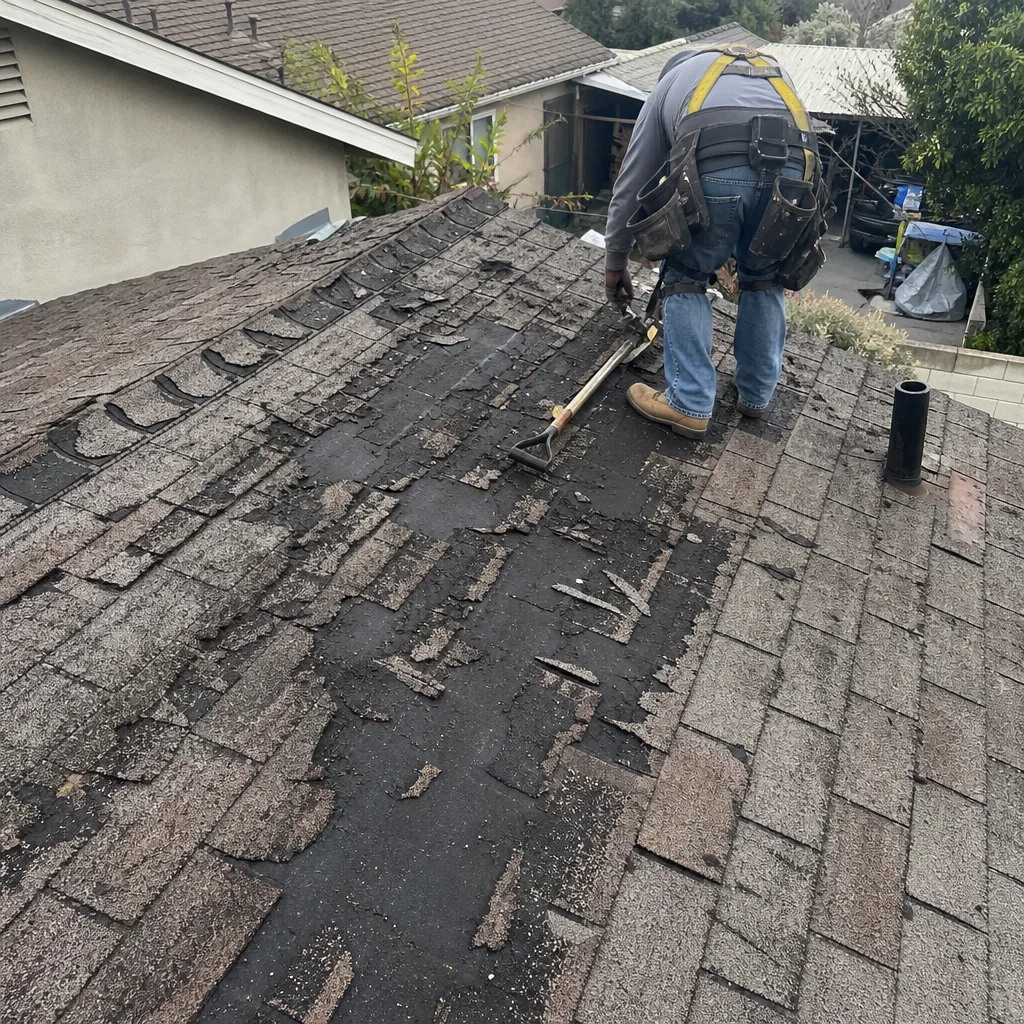 Before
 After
 Before
 After
 Before
 After